

Lola Salem is one of the few contemporary cultural critics who is both relentlessly critical of the current moment and who refuses to give into a quietist pessimism. Last weekend, she gave an excellent lecture at Ideas Matter’s annual intellectual retreat, The Academy. We are delighted to reproduce her essay below.
If you enjoy this essay, you will definitely enjoy The Academy. You can buy heavily discounted tickets for next year’s Academy event here.
We also strongly recommend that you subscribe to Lola’s Substack.
What Remains? Art and Memory in the Post-Cultural State
This essay is adapted from a lecture delivered for Ideas Matter on Sunday 23 August 2026
AUG 24, 2026
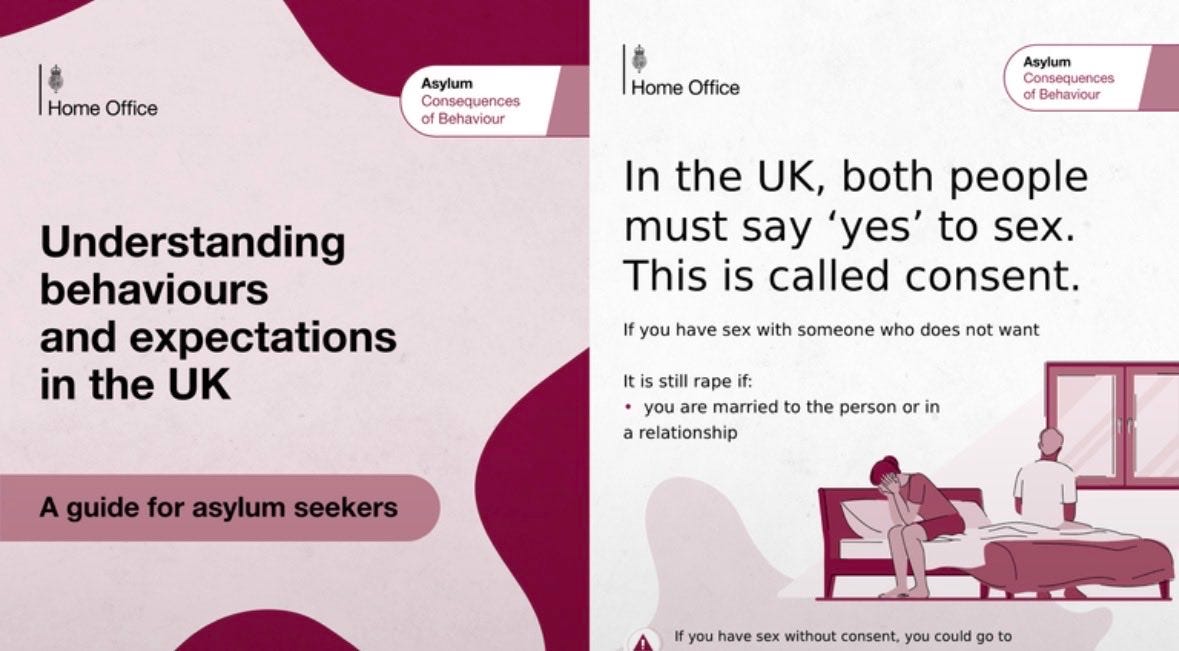
A few days ago, the Home Office released a booklet which informs people of what to expect when living in the UK, which behaviours to respect and, hopefully, follow. Habits and mores usually work because they are implicit and absorbed via mimetic desire or equivalent. And very much expected from people who seek to live in the country in the first place. This is perhaps especially striking to see such pamphlet in Britain, a country famously attached to unwritten rules, including its own constitution.
Conformism to these principles (if we accept that they contribute to what defines culture) does not work through pamphlets. So what is this document for? Does the state really believe that it can manage culture like this? Or has it given up on culture altogether and is, in fact, doing something else?
At first glance, Britain does not look like a country that has given up on culture. We have an Arts Council. We have the BBC. We have publicly funded museums and galleries. We have national collections, orchestras, theatres, libraries and heritage organisations.
These institutions are paired with a whole policy infrastructure. The government produces cultural strategies. Arts organisations produce programmes. Funding bodies distribute hundreds of millions of pounds.
And, of course, everybody seems terribly busy. Especially the cohort of teams that are heavily paid to prove that art is excellent for the economy.
There are programmes for access. Programmes for young people. Programmes for wellbeing. Programmes for inclusion. There is culture for economic growth, culture for regional regeneration, culture for community cohesion, culture for environmental sustainability.
In fact, the arts have acquired an extraordinary number of responsibilities. Yet the more responsibilities we give our cultural institutions, the less confident many of them seem about their original responsibilities.
A museum has to explain how it contributes to wellbeing or sustainability. Maria Balshaw, who recently retired from the Tate directorship, proclaimed that the entire museum sector is in a state of “climate and nature emergency” – in line with former director Nicholas Serota who advocated for more guidelines regarding environmental control in galleries. However, if you ask why a particular object deserves to be preserved for another five hundred years, the answer becomes less certain.
A funding body has demonstrate which communities an artistic project intends to reach. But it is much harder for it to tell whether the work is any good.
A theatre can produce a detailed account of the demographic composition of its audience without answering the more obvious question of why anybody should want to see their plays.
This is part of the condition that I call the post-cultural state.
By this, I don’t mean a state without culture. The post-cultural state preserves the machinery of culture after losing confidence in the judgements that once justified it. It is a polity that fails to answer fairly basic but fundamental questions such as:
What is worth preserving?
What is worth making?
And what is worth handing on?
Those questions require judgement, discernment, in other words, taste; a special type of knowledge and sensibility. We tend to use taste today as though it meant preference and, in a postmodern context, a way to flatten differences of nature or importance. David Marx integrates this under the concept of “omnivorism”, “the rejection of cultural hierarchies, which promoted equal interest in all genres, tastes, and historical styles”, and “poptimism”, “an extension of omnivorism, celebrating commercial culture and treating popularity as the ultimate democratic arbiter of quality”.1From an historical and philosophical point of view, taste may look like an epistemological tool. Giorgio Agamben sees there a possible linguistic connection between sapor (flavour) and sapiens (the wise). Aesthetics, then, allows us to recognise qualities in something which we may not yet be able to reduce to a rule or fully explain. He calls it as follows:
“From the beginning to end, the problem of taste thus presents itself as that of ‘another knowledge’ (a knowledge that cannot account for its judgements but, rather, enjoys them; or, in the words of Montesquieu, ‘the quick and exquisite application of rules that we do not even know’2) and of ‘another pleasure’ (a pleasure that knows and judges, as is implicit in Montesquieu’s definition ‘mesure du plaisir’): the knowledge of pleasure, indeed, or the pleasure of knowledge, if in the two expressions one gives the genitive a subjective and not only objective value.”3
Today, however, judgement and taste have become an uncomfortable words.
For decades now, we have seen an exponential decline by which the institutions are no longer able to even pretend that they’re interested in their original role of properly supporting artists and art. The re-alignment of the arts with things that are absolutely external to them (e.g. climate change, wellness and global health, etc.) is a cornerstone of the post-cultural state. What it describes, more broadly, is that the state political interest, at least at the level of policy, is evacuated of an understanding of what culture is for and what it is that culture does. This happens, for example, in what potential investment in culture might do with regards to national unity, how people’s sense of belonging works, how people vote, etc. The post-cultural state simply gives up on trying to navigate any of this.
I want to explain how we got here.
And, to be clear, my argument isn’t that the state should entirely get out of culture. I think that would be unwise. Nor is this going to be thirty minutes of complaints about woke curators, although they may make an appearance. The problem is older than our present culture wars, which are honestly stale and sterile.
1. Before cultural policy
So, let me begin with a distinction.
Political power has always had a relationship with art.
The Church, whether in its catholic, orthodox, or protestant branches, is the obvious example in Europe. It not only built cathedrals and gave the tempi to much of artistic production, but organised time through the calendar, space through the parish, memory through ritual. Evidently, even though it worked through decrees – and returned regularly to aesthetic issues, such as during the Council of Trent (1545-1563) in the aftermath of the Reformation – the Church was definitionally entangled with culture itself.
To turn again to the Medici, the Florentine family did not spend all that money because they believed art should remain uncontaminated by politics. Art heped to display wealth and consolidate or protect prestige, allowing rulers to tell stories about themselves. Whether we want to call it propaganda, or vanity, or anything else, it clearly embodied a strong relation between the art world and political power.
But art patronage is different from what we now call cultural policy.
A Renaissance prince might support an academy or employ an artist. But he did not normally imagine that he was managing something called “the cultural sector”. Additionally, there were limits to his authority.
One of my favourite thinkers is Marc Fumaroli. He was born in Marseille in 1932, raised partly in Fès, Morocco; he taught at the Sorbonne before becoming professor at the Collège de France and later a member of the Académie Française. Two of the most prestigious cultural institutions in France since the early modern period. You can imagine that he would not be one to turn against the arts. However, in the context of the development of the “creative industries” (which happened in Britain under New Labour, and in France under President Mitterrand and minister Jack Lang), he took a stand against the state.
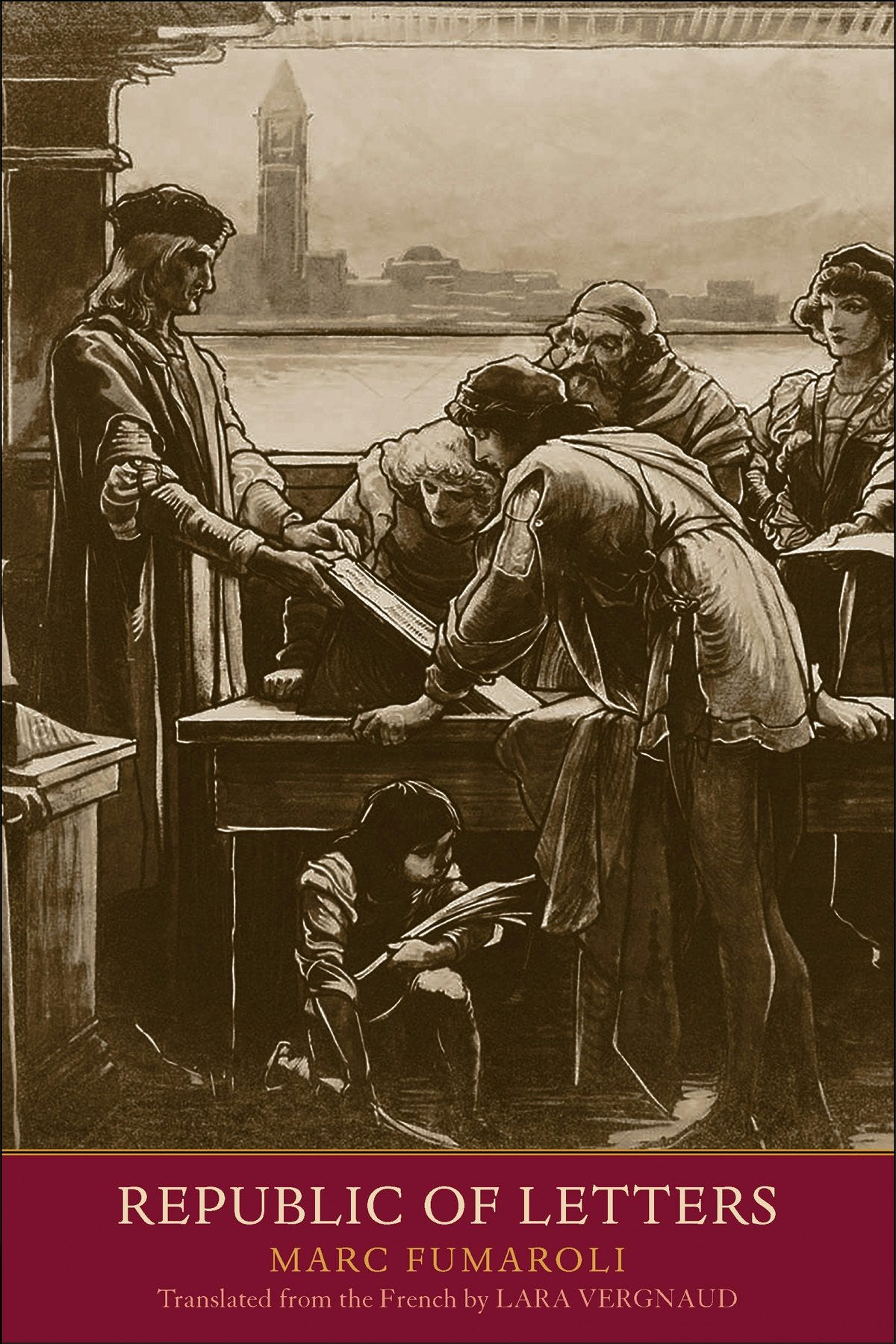
His point is particularly beautifully when writing about the academies of Renaissance Florence. The prince could provide money and protection. He could enjoy the prestige. But the intellectual and artistic life taking place around him had rules and rhythms of its own. Florentine Academies were not administrative units with a program handed by political figures. They were typically societies of scholars and artists governed by habits of friendship, manners, and shared discipline, which allowed them to learn, argue, and experiment together. By definition, culture then was that of sociability, and academies self-governed as if they were micro-societies. Fortunately, none of these conditions of possibility for intellectual life were the effects of policy.
A striking example of what this freedom could produce is opera. In late sixteenth-century Florence, circles of intellectuals such as musicians, poets and scholars experimented with the notion of what might Ancient Greek drama have looked like? Out of that scholarly curiosity came an entirely new art form, which would shape European musical life for centuries, topping the hierarchy of secular vocal music for much of its history. It’s pretty obvious that nobody actively commissioned intellectuals and artists, as those who were active in the Camerata di Bardi, to develop an innovative interdisciplinary musical form with measurable community impact.
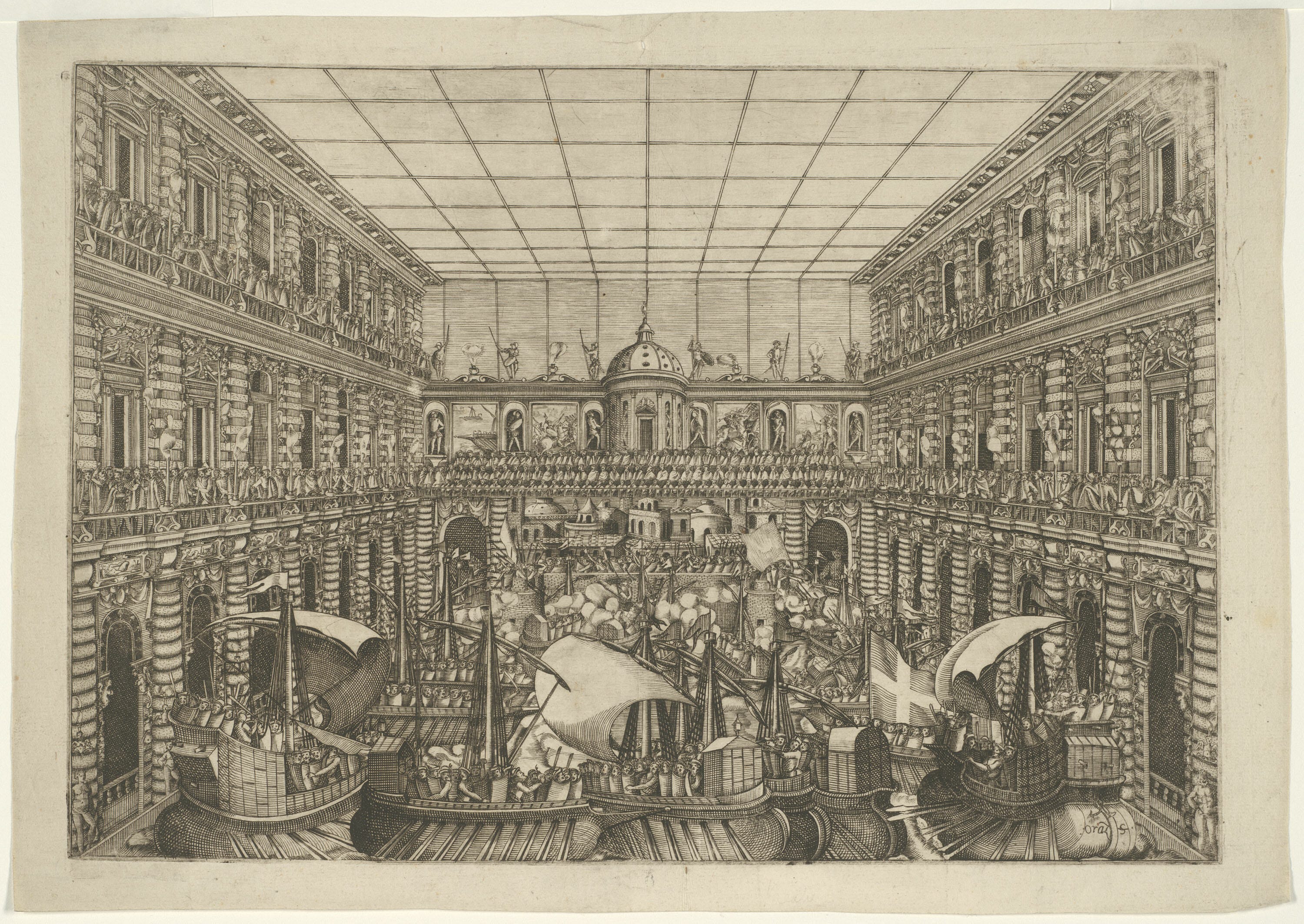
In fact, many of these intellectual circles were wary of political power. The members cultivated a taste for secrecy and the access to the group was strictly regulated, especially along the lines values that were conceived at the heart of the former Republic of Florence (1115-1532), before the reign of the Medici family, of which some intellectual nurtured a certain nostalgia, including concepts of “equality”, “honesty”, and “humanism”.
This older system recognised something that our own has difficulty recognising. Yes, art patron had money and power. But the artist had something the patron did not. A gift. Skills. Imagination. Knowledge. Taste. And rulers implicity shared if not taste at least some form of trust, a cordial entente – which of course, could be negotiated and not always positive, but it formed the baseline of the relationship.
Unfortunately, our modern cultural bureaucracy is unable and/or unwilling to sustain that condition of creativity.
To understand how, let us come back to Britain.
2. An admirable beginning
After the Second World War, Britain dramatically expanded public support for the arts. The Arts Council was created in 1946. In 1965, Jennie Lee, Britain’s first Minister for the Arts, published A Policy for the Arts. There is much in this moment that I admire. First of all, the ambition. Great art should not belong only to wealthy people in London. There should be theatres, orchestras, museums and galleries around the country.
Public investment was confident in its role and capacity to support excellence while giving the opportunity to more people to get in contact with it.
So, the original democratic promise was essentially to widen access to something considered valuable. Same in France with André Malraux (Minister tailored around him in 1959). But what would happen if people did not come? Or if they came, but not in the expected proportions? Or when politicians began asking why taxpayers should fund the whole thing.
You don’t have many options here. You can either defend the value of the work. But that requires making judgements – articulating what taste is, what discernment is, and what purpose it serves.
Or you find yourself vulnerable to what people think about taste and judgement. If you say that a particular orchestra deserves public money because it is excellent, somebody can ask why its music is excellent. If you say a museum should preserve certain objects because they matter to British civilisation, somebody can ask who decided what matters. If you say Shakespeare deserves public subsidy, somebody may ask why Shakespeare and not somebody else.
So, quite quickly in the 20th century, and especially after the 1968 French “cultural revolution”, another form of justification became attractive. Instead of defending what art is, you defend what art does. That paradigmatic shift turned out to have enormous consequences.
3. From access to outcomes
I’ve just mentioned the 1960s. For some time already, while governments were expanding cultural institutions, artists and intellectuals were changing their ideas about art itself. Many had spent decades attacking artistic conventions. But by the 1960s, the attack increasingly extended to institutions, hierarchies and social conventions.
One of the most important figures of that shift is Pierre Bourdieu, one of the most prominent sociologists of the period, particularly on matters related to education and aesthetics. In 1969, he co-wrote the influential Love of Art (L’Amour de l’art). He worked across French and international institutions, such as UNESCO, on matters related to the development and expansion of cultural policy.
Bourdieu wrote as if high art is more or less straightforwardly ideological and mystificatory. He believed that this narrative is fabricated for specific means, calling it “the charismatic ideology” of art. For Bourdieu, this means that art is a form of power. According to him, in a democratic society, art is in fact a means of asserting what are essentially aristocratic values. The art museum is a “civic temple” designed to exclude the participation of the masses.4 The more “democratic” art becomes, the more the gifted (the talented, the aristocrats of culture) are distinguished from the mere barbarians, the uncultured Philistines.
Following the same logic, according to Bourdieu, there is no room for innovation in form, only social innovation. Or, more exactly, the former is a reflection or translation of the latter. Creativity may have some value, but the point is that it is always reducible to a social phenomenon.
As case study, let us compare the way Norbert Elias and Pierre Bourdieu approach Mozart. Although Elias would accept that Mozart was a “genius” (i.e. would see no contradiction with the fact that it could coexist in the marketplace and through bourgeois social formation), Bourdieu would see it as wedded to a charismatic and hence justificatory understanding of artistic production. He would then prefer to reserve his admiration for the social manipulations of agents such as Baudelaire or Flaubert.
Bourdieu and co’s influence was paired with another trend; that of the language of artistic rebellion, which rose among those who presented as counter-cultural. For example, in opposition to bourgeois morality, imperialism, capitalism, patriarchy, the family, sexual convention and the nation-state.
But the rebels entered the bureaucracy, or at least discovered that their rebellion could be funded. And so their language of artistic rebellion eventually met the expanding machinery of the state. Ideas which began as critiques of institutions became part of the language through which institutions justified themselves.
In Britain, the ICA (Institute for Contemporary Art) is almost the perfect illustration for this. It was founded in 1947 explicitly as an alternative to established cultural authority — a “laboratory rather than a museum”. Its history therefore contains the contradiction that interests us: how does an institution institutionalise opposition to institutions? The ICA itself later described this as its double role of being both an established institution and a “thorn in the side of the establishment”.
Increasingly, cultural institutions could describe themselves as permanently subversive while becoming larger, richer, more professional and managerial.
The artist can now attack power while applying to power for a grant. And the administrator can decide to fund attacks on the institution as evidence of the institution’s openness. Everyone is perfectly happy, aren’t they?
Meanwhile, another intellectual change was taking place. Cultural policy gained traction in government (although worth mentioning that Britain preferred the formulation of “public support for the arts” until the field widened to take in popular entertainment and the cultural industries + stronger resistance than in France about administrative centralisation). Nevertheless, the concept of cultural policy gained in prominence. And yet, at the same time, the definition of what culture is kept being imperfect and inconclusive.
Contrary to other fields in which policy start from clear definitions, what is the object of cultural policy? Is it the Raymond Williams-esque view of “culture as ordinary” or the postmodern “everything”? What lies outside of this fantastical jurisdiction? The ambition to meaningfully regulate every custom, habit, preference, practice or association is absurd — at the very least in liberal democracies. As totalitarian regimes show, a policy for culture in this maximal sense amounts to a policy for the formation of social life itself.
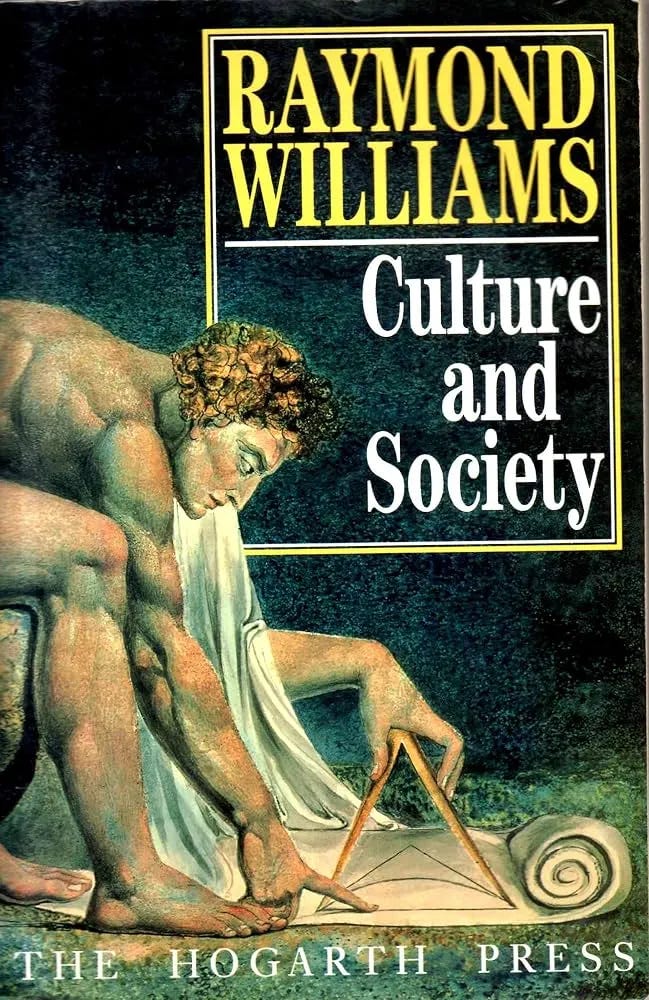
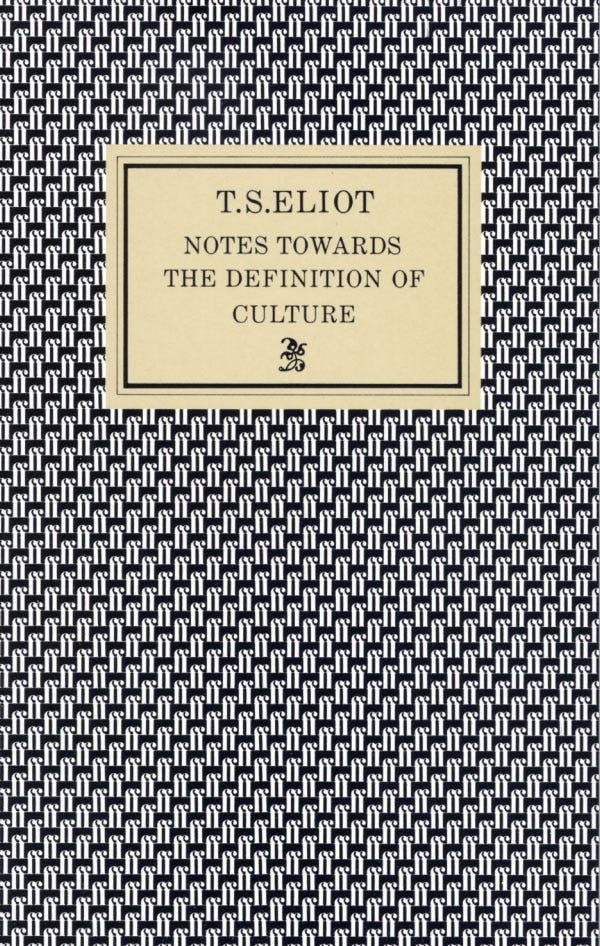
This ambiguity is visible in the way different countries have brought different activities within the purview of public action and left others outside it. The scope of German Kulturpolitik has historically reached beyond the arts to encompass education, sport and leisure. Italy developed a rather different conception around beni culturali, or cultural goods, centred largely on the protection of heritage and administratively distinct from music and theatre. The Netherlands followed another institutional logic, combining welfare, health and cultural affairs within a single ministry created in 1982. Meanwhile, in Belgium and Québec, questions of language have occupied a central place. These variations concern more than administrative arrangements or national styles of government. The very object of said policy changes; nevertheless, the concept travelled considerably further than the agreement on the thing supposed to be administered.
Debates addressing the definition of culture are long – too long for today’s presentation, I am afraid. So I unfortunately have to skip quite a few centuries and intellectual quarrels. I hope you can forgive me. Perhaps we can, for now, agree that it has something to do with human flourishing, knowledge, habits and mores, and even institutions to the extent that they’re a special embodiment of a country’s cultural history. When it comes to art, the quintessential cultural artefact, culture may generally mean our interaction with art and the cultivation of judgement/taste.
But with the development of cultural policy that the 20th century witnessed, it increasingly meant identities, representations, communities, and then potentially everything.
Arguably, today’s dominant definitional strand is cultural relativism. It is perhaps best captured by Zygmunt Bauman (1925-2017), a prominent postmodern thinker: “Culture is about hierarchy, discernment and evolution; postmodernity, on the contrary, is about flattening of hierarchies, absence of discretion and equivalence.”5
Of course, once culture encompasses almost everything, cultural policy can potentially concern almost everything too. And with this, art becomes capable of being recruited for almost any political purpose.
4. New Labour and creative industries’ exuberance
The decisive British moment, comes with New Labour.
For the youngest among us, the atmosphere of the late 1990s and early 2000s is difficult to reconstruct now. There was optimism. There was the National Lottery. There was Cool Britannia. There was enormous confidence in Britain’s “creative industries”.
Artists, designers, musicians, architects, filmmakers and fashion were going to help define a new Britain. And public funding expanded.
For people working in the arts, this could feel exhilarating. Especially when you are told over and over that creativity was economically valuable; that it was socially valuable; on top of being personally liberating.
There was remarkably little pressure to distinguish between these claims. The market wanted returns on investment. Artists wanted political change. Politicians wanted social change. Developers wanted regeneration. Cities wanted tourists. Everyone could apparently have what they wanted.
Perhaps people did not notice the ideological bargain being made. Because this system changed the ecology of art.
Britain created an enormous cultural estate. It produced more arts graduates. It created more organisations dependent upon grants. It accelerated the professionalisation of cultural administration. For example, it created careers in mediation, engagement, outreach, strategy and cultural management.
Was any of this sustainable?
5. The great displacement
This brings me to what I think is a central mechanism of the post-cultural state.
As my business partner, the brilliant Pierre d’Alancaisez, recently said: claims made for art have become displaced. We’ve stopped saying things like:
This is worth supporting because it is good.
Or: This matters because we should preserve it.
Or: This artist possesses an unusual talent and should be given the freedom to develop it.
Or: This or that text matters because the author has something special to tell us beyond the specifics of its historical context – or perhaps thanks to it. (Remember the beautiful simplicity of Bible study and reading groups?)
Instead, we’ve heard:
Art improves wellbeing and public health.
It builds community.
It tackles climate change.
It increases representation and fights inequality.
It regenerates deprived areas.
It drives economic growth and attracts investment.
It makes us better citizens.
At some point you begin to wonder why we haven’t simply put the Arts Council in charge of the Treasury and the NHS.
The problem isn’t that art can have none of these effects. The mistake made here was to turn these possible consequences into the purpose of artistic activity.
Because once public funding is justified through outcomes, the funding body has to demonstrate that the outcomes occurred. How many people came? How old were they? What was their ethnicity? What was their postcode? How did they feel? Did they report an increased sense of belonging?
The artwork itself disappears behind the report about the work.
6. Artists’ complicity
There is a tendency to blame administrators for all of this. That is way too easy. Artists participate in the system too.
And this is why I think arguments about censorship often miss what is interesting about contemporary cultural institutions. As the campaign Freedom in the Arts has repeatedly demonstrated, the system operates through anticipatory compliance and peer pressure. It tries to be risk-free. Even if, in theory, everybody is free and encouraged to show their true, authentic selves.
Paradoxically, the art world loves the language of risk. Artists are supposed to make us uncomfortable, to challenge us. Exhibitions are styled as “radical” or “subversive”, yet the actual range of acceptable political conclusions can be remarkably narrow.
This is partly because the people involved increasingly belong to the same professional world. And it is one of the reasons why contemporary culture wars are so tedious.
The Right says things like: look at these terrible left-wing artists.
The art world replies stuff like: look at these terrible right-wing philistines.
Both sides make money from the performance. Neither asks the more interesting question. Why did we build a system in which artistic survival depends so heavily upon pleasing a professional managerial class in the first place?
7. The market isn’t coming to save us
Some people on the right have a simple answer. Stop funding the arts, and let the market decide.
I think this is a terrible idea. The market has been intimately involved in producing the situation I have just described. The language of both the state and the market have become entangled. Everyone segment audiences, seeks outreach and engagement. Everyone is terrified of irrelevance and always try to reward visibility.
The contemporary art world has become extremely good at criticising capitalism in galleries financed by high-net-worth individuals, property developers and luxury brands. This is occasionally funny, as it is revealing. As Mark Fisher (author, for example, of Capitalist Realism) understood well, capital has an extraordinary ability to absorb its own critique. I think the state learned some of the same tricks.
Importantly, libertarianism in the arts has nothing to say about what to do when money runs out, or when K-Pop supplants classical music, or what taste look like. It sees art and culture as entirely disposable.
[A brief disclaimer here. I am not proposing a choice between the state and the market. I don’t think such a choice exists in the abstract, and I certainly don’t think every art form requires the same institutional arrangement. The market is very good at some things. So is the state, particularly in the case of “high arts”.
Video games, for example, seem perfectly capable of thriving largely through the market. Classical music presents a rather different problem. An orchestra or an opera troupe are extraordinarily expensive to maintain, the repertoire requires years of specialised training, and much of what is artistically valuable will never attract an audience large enough to sustain it purely on a commercial basis.
Museums are different again. Here I think the state has a particularly strong obligation. A national museum holds things in trust across generations. Decisions about what we preserve, study and hand on cannot be treated as ordinary consumer choices, because the state is not — and cannot really pretend to be — agnostic about the inheritance of its people, or about the forms of knowledge and human flourishing it considers worth preserving.
So there is no one-size-fits all funding model I want to defend now. Different arts have different economies, different publics and different relationships to inheritance. The question is what kind of institution allows each form to flourish without subordinating it either to political instruction or to immediate consumer demand.]
8. The post-cultural state
And this is where we are now. In theory, what has survived are the institutions, their professional vocabulary, the grant criteria, the occasional ideological habits, etc. But the confidence in what culture is, and what it is really for, has gone.
In Britain, as elsewhere, the state has less money and its philanthropic ecosystem remains comparatively weak when compared to the US, for example. Audiences are fragmented, increasingly along sectarian lines. The national stories are still making politicians uncomfortable.
And the cultural bureaucracy has largely lost the ability to explain why the state should support art except by attaching art to something else, whatever the current priority happens to be.
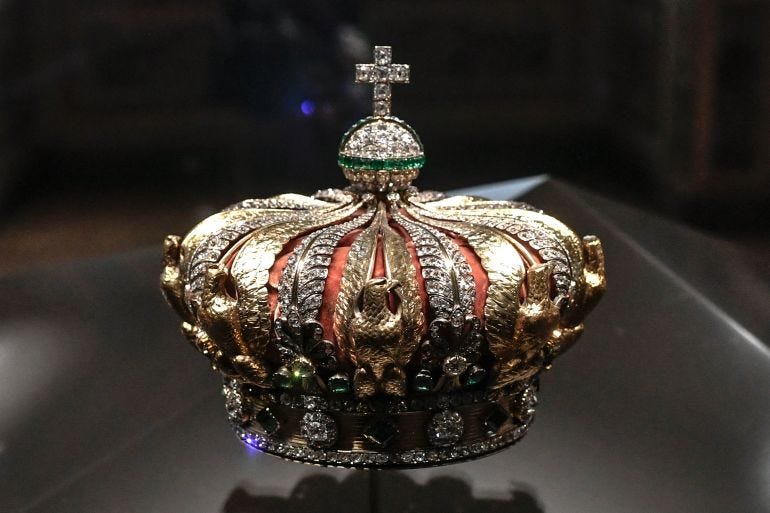
Defining the Post-Cultural State
This forms part of what I mean by the post-cultural state. Its political interest in culture has been evacuated of a serious account of what culture actually does over generations.
How does a society develop a sense of belonging?
How does historical memory survive?
How do aesthetic standards develop?
How do people acquire taste?
How do rituals, stories and symbols bind strangers together?
How does a nation represent itself to itself, before it even does to others?
These are enormous political questions. For most of history, states took them extremely seriously. Now Britain, as perhaps many other countries around the world, has cultural policy without much of a theory of culture. The entity charged with looking after a country’s cultural inheritance has remarkably little to say about the relationship between that inheritance, its people and their future.
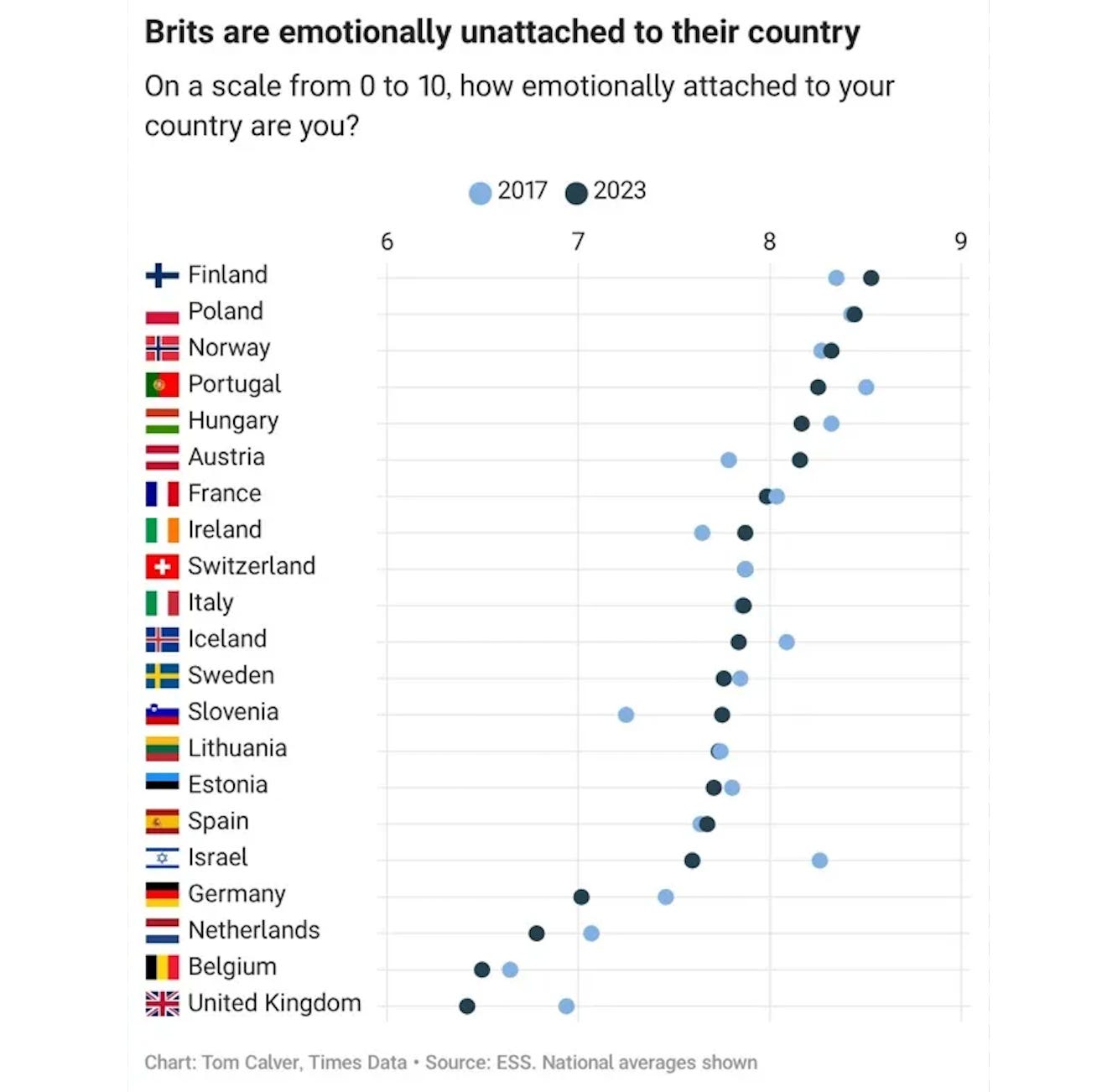
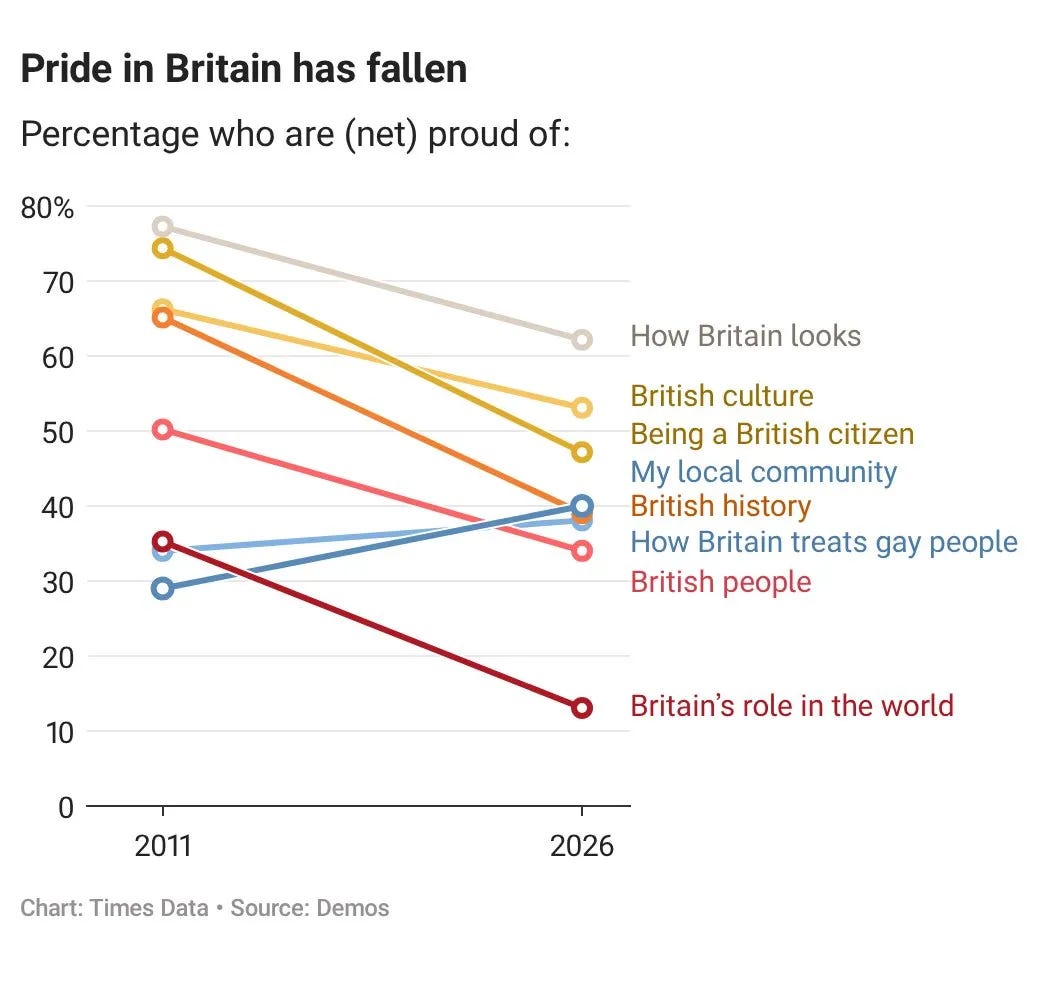
Tom Calver, Data Editor for The Times, report on recent findings by Demos which demonstrates that British people’s attachment and faith in their country has plummeted.
If public cultural institutions do not help mediate a relationship between a people and their inheritance, who does? The market? TikTok? Netflix? Spotify? Tourism boards? Algorithms? AI? I am not convinced that any of this constitutes progress.
9. Culture needs builders
So what do we do?
Somebody has to care enough to begin. This is where cultural reconstruction starts. And I am sure all of you do care. Otherwise, you have chosen a very strange way to spend the last half hour reading/listening to this talk.
Lamenting about decline is easy. Building things up is much, much harder, but culture needs builders.
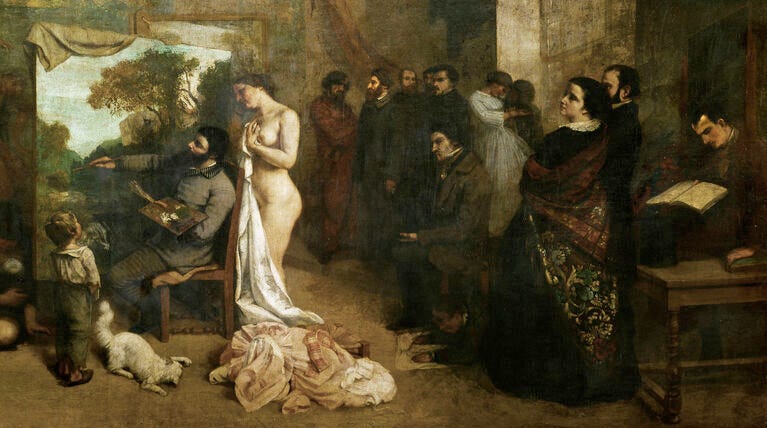
Culture Without Builders
Pierre d’Alancaisez and I have been trying to do exactly that – although we feel a bit alone, especially without financial backing.
At Verdurin, Pierre’s project space in East London, we are trying to build some of the things I have argued are missing today.
We think Britain needs at least two things rather urgently.
It needs people capable of exercising cultural judgement.
And it needs people who actually understand the institutions they hope to change.
So we are building both.
The first is the Verdurin Fellowship for Cultural Criticism. We want to take a dozen talented younger writers and critics and train them seriously — in aesthetics, judgement, rhetoric and criticism — and give them the mentors, publications and networks to become consequential.
Because if we dislike the people who will run our cultural institutions in twenty years, we should probably start finding their successors now. Train the new cadres.
The second, which I currently call Sidonie, is a project that aims to teach people how cultural institutions and power actually work. Where does the money go? Who decides? What can trustees change? How does philanthropy interact with the state? Why does the Arts Council behave as it does?
If you want to change an institution, it helps to know how it works, and it helps even more to equip the right people with an ironclad theory of culture that starts from first principles.
That is our wager.
Thank you for listening.
END
1
David Marx, Blank Space: A Cultural History of the Twenty-First Century(Viking, 2025), p. 6.
Montesquieu, “Gusto” in Eneiclopedia o dizionario ragionato delle scienze, delle arti e dei mestieri [Encyclopedia, or a Systematic Dictionary of the Sciences, Arts and Crafts] (Paolo Casini ed.) (Bari: Laterza, 1968), p. 735.
Giorgio Agamben, Taste, trans. Cooper Francis (Seagull Books, 2017), pp. 6-7.
Pierre Bourdieu, Alain Darbel and Dominique Schapper, The Love of Art: European Art Museums and Their Public (Les Éditions de Minuit, 1966), trans. C. Beattie & N. Merriman (Cambridge: Polity, 1991).
Zygmunt Bauman, Intimations of Postmodernity (London: Routledge, 1992), p. 34


Culture is: common language, shared values, morals, manners, outlook, heritage, laws.
And by the by: we do have a written constitution. Magna Carta 1215 backed up by the Great Bill of Rights 1689 and the Common Law. These have been buried in a vast tonnage of legislation and Code Law adopted from the EEC/EU.
Culture is not art galleries, fish and chips, museums, opera, dress. These are entertainment, fashion, diet.
The political elite and bien-pensants have given up on British culture - a fusion of the different elements of our Celtic, Germanic, Nordic lineage - debauched it so it has no standards of ethics, morals, values - anything goes: a woman can have a penis but not a womb, two men can get married and be each others husband, the nuclear family has been replaced by career women who want neither children nor a husband, the feminisation of society and the “toxicity” of masculinity, citizens can be vilified, prosecuted for flying the flag of our Nation.
Then our ages old culture - THE most successful and respected in the World - must now be strengthened by diversity, we must be multicultural, our British culture enriched by people - about 12 million over the last twenty years - from other cultures who need a pamphlet telling them not to rape children, etc.
Mark Stein: if you take a quart of vanilla ice-cream and mix it with a quart of dog fæces, the resulting mix will taste more of the latter than the former.
No. The British have not given up on their culture, their rulers have given up on both - the British and our culture.
The state should butt out of culture. Who wants state directed “culture”, ru n by state apparatchiks?
Not I, that’s for sure.