

Jacob Reynolds is an associate fellow of the Academy of Ideas and the Policy Director of the Brussels think tank Freedom and Sovereignty Initiative Europe (FSI Europe). This essay was originally published on Jacob’s Substack.
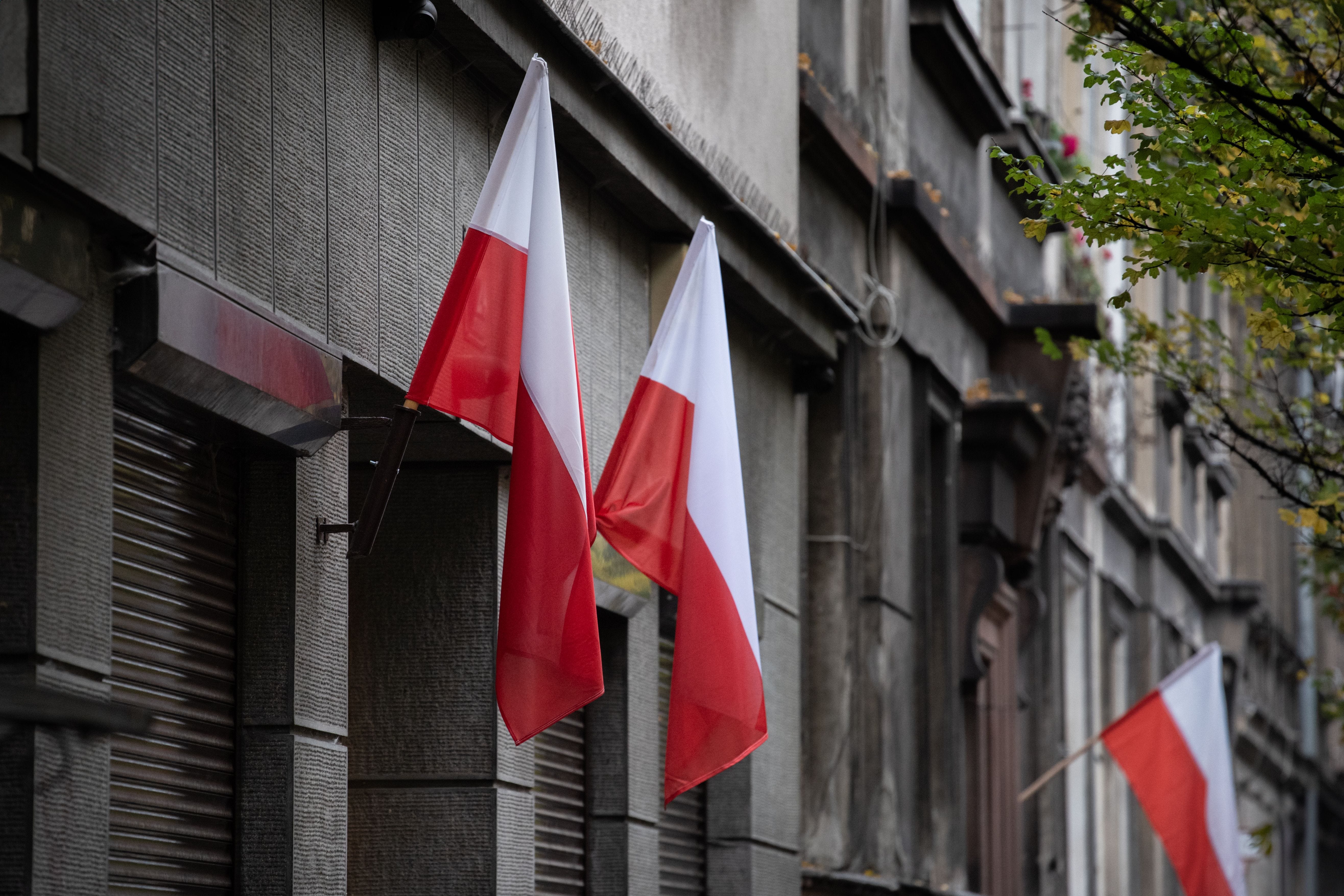
On the evening of Friday 30 October, while President Nawrocki was due away on an official visit to Senegal, Donald Tusk’s government sent riot police into Poland’s Constitutional Tribunal. Hours earlier, the court’s president, Bogdan Święczkowski, had been declared ‘suspended’ by a fellow judge, the outcome Tusk had been pushing for since he accused Święczkowski of blocking the government’s own appointees. Officers in helmets and shields took the grounds, protesters were arrested, and Nawrocki, had to turn his plane round mid-flight to reach the court before dawn. The opposition called it what it was: a coup. Tusk called it ‘restoring the rule of law’ and said there was ‘no other way’. Brussels, which spent eight years fining and lecturing Warsaw for “interfering” with this same court, has so far found nothing to say.
The events of last night are only the most recent example of an intensifying trend of what is sometimes called “authoritarian liberalism” in European politics: leftist or centrist governments engaging in nakedly anti-democratic politics to sustain their grip on power.
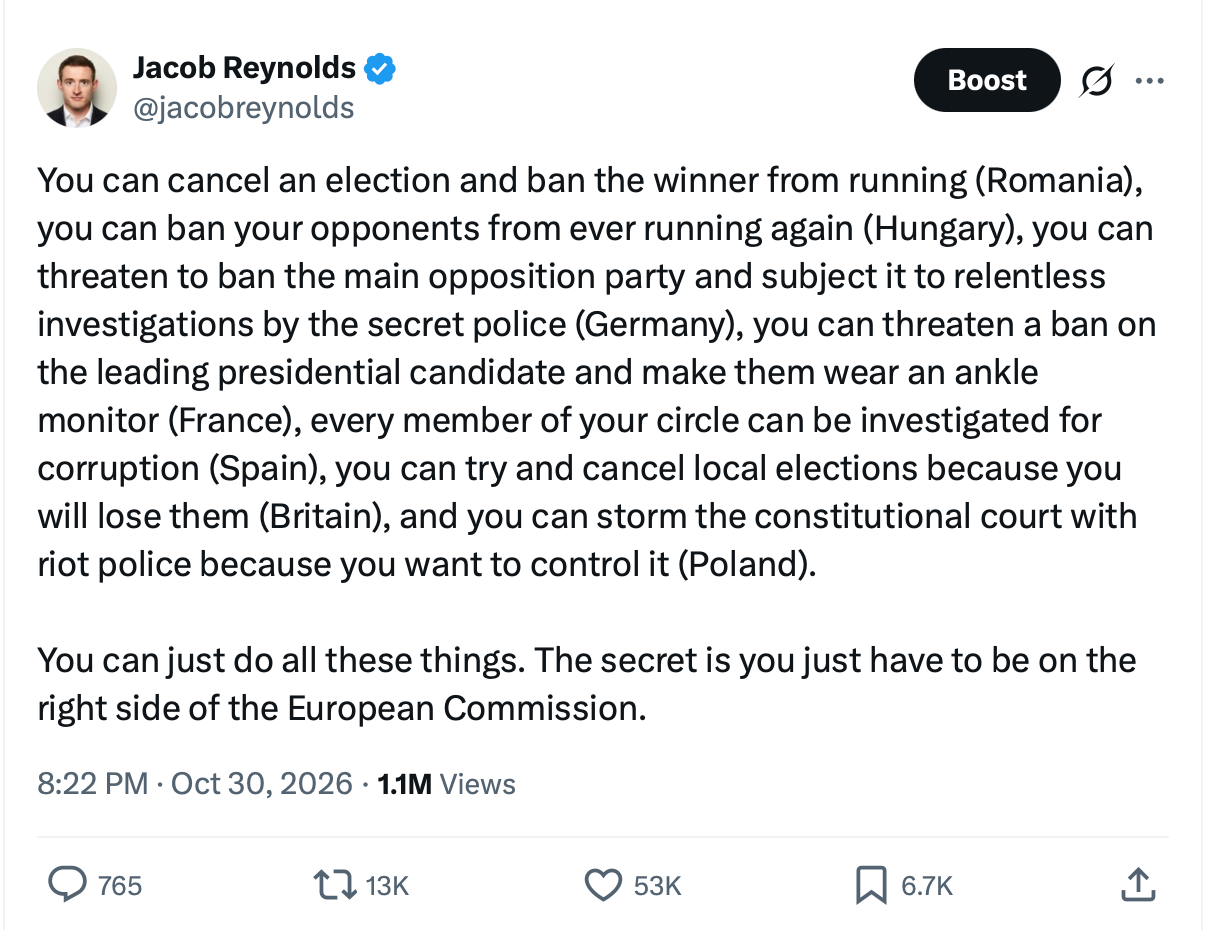
In Romania, the authorities cancelled an election and banned the winner from running: the Constitutional Court annulled the 2024 presidential vote two days before the run-off, after Călin Georgescu topped the first round, and then excluded him from the rerun. In Hungary, the new government has banned its opponents from ever running again. In June Péter Magyar’s two-thirds majority imposed a retroactive eight-year limit on the premiership, aimed squarely at Viktor Orbán; in July it added term limits for MPs that bar 22 of Fidesz’s 52 deputies from standing again, and cut short the term of the Fidesz-elected president. In Germany, the main opposition party lives under the threat of a ban and relentless investigation by the secret police. The domestic intelligence service has branded the AfD ‘confirmed right-wing extremist’, and the SPD, a party of government, made a ban official policy at its 2025 conference, demanding that proceedings be prepared ‘without delay’; its leaders have kept up the call ever since. In France, the leading presidential candidate has been threatened with a ban and sentenced to an ankle monitor. The courts barred Marine Le Pen from office with immediate effect, then on appeal cleared her to run in 2027 while sentencing her to a year in an electronic tag, a condition she says makes campaigning impossible. In Spain, every member of the prime minister’s circle has been investigated for or convicted of corruption and he simply carries on: Pedro Sánchez’s former transport minister has been sentenced to 24 years, his brother and his former attorney general have been convicted, and his wife faces a jury trial. In Britain, Labour tried to cancel local elections because it was going to lose them, moving to postpone 30 council polls due in May, most of them in areas it ran, until Reform UK took it to court.
All of these measures were taken in the name of “defending democracy”, when it is obvious to anyone with even half a brain cell that they represent its antithesis. Those in power get away with it because they can count on the sympathetic ear of the European Commission, international courts, the support of fellow technocratic elites, and the network of multinational, globalist, state-funded NGOs.
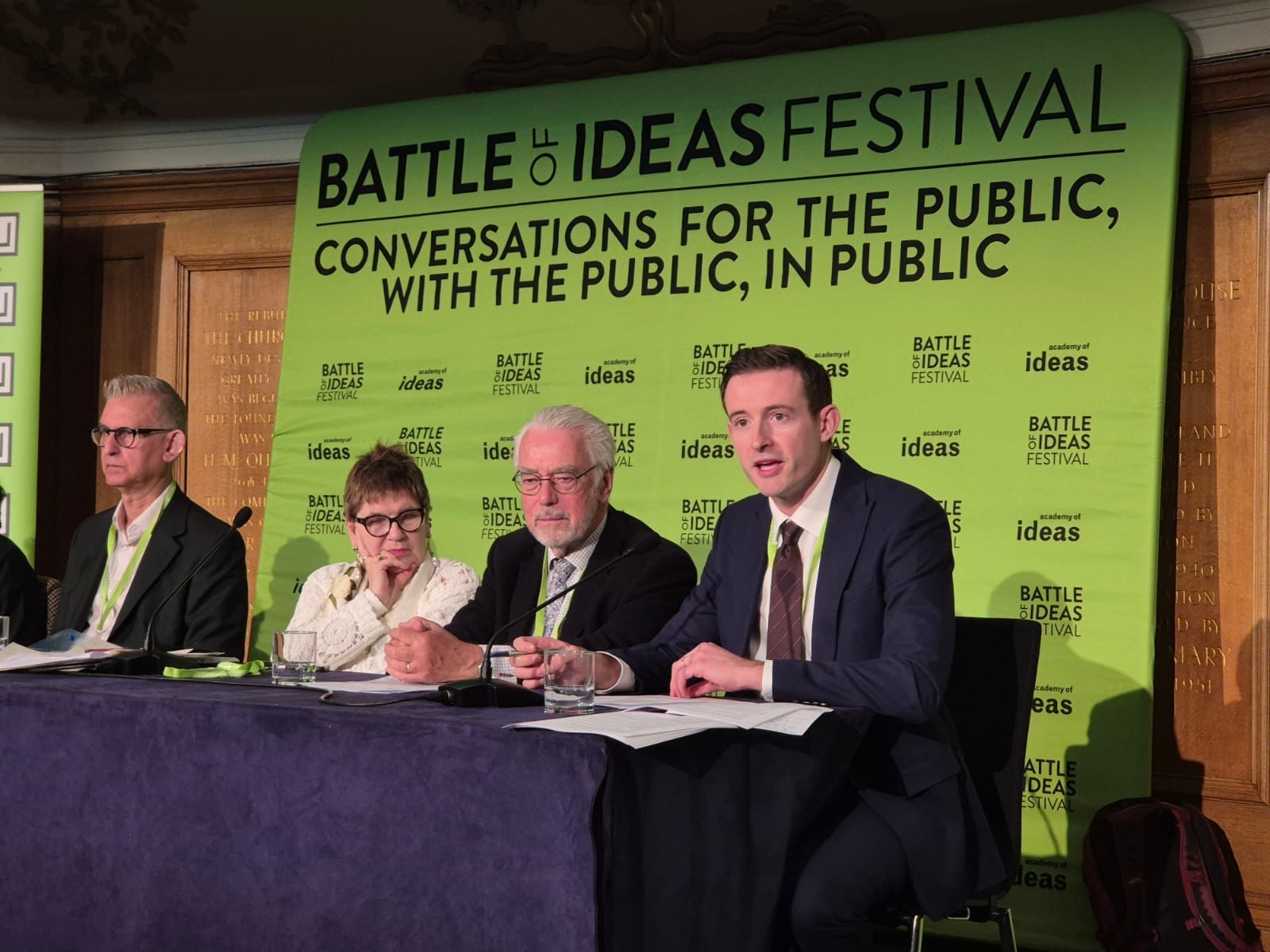
Earlier this month, I gave an introduction to the Battle of Ideas festival on the topic of Controlling the narrative? The politics of misinformation and truth. I argued that what has thus far characterised the technocratic elite - attempts at total narrative and information control, a topic I have written on at length - is moving into a more overt form of political control.
Below is a lightly edited version of that speech.
Beyond Narrative Control
Narrative control. It has become one of my favourite terms for capturing what is going on in the increasingly desperate attempts of legacy politicians to maintain their grip on power.
Today I want to explain what it means, and then show how the political elite, forced by their stubborn attachment to the politics and ideologies of the past, are going beyond narrative control into more overt forms of control.
Narrative control
What is narrative control? In essence, it refers to the establishment’s – often the government’s – wide efforts to influence what public attention is focused on. It covers both overt forms of information control such as censorship of the internet, and also softer forms of control, such as the curious alignment the media displays on almost all potentially ‘dangerous’ crises.
Consider Andy Burnham’s National Centre for Information Defence, announced on 22 September (of course, he didn’t announce it to Parliament but to the United Nations). Its job, in his words, is to ‘detect, attribute and disrupt’ so-called hostile information attacks. It will work hand in glove with the intelligence agencies, the police and the social media companies.
It is key to note the word ‘disrupt’. He doesn’t think this is a matter for rebuttal or argument. But ‘disruption’. For him, it is disruption like the way you would disrupt a drug-trafficking gang.
And it is only the latest in a long line: the culture department’s proposed ‘prominence regime’ to push ‘trustworthy’ news to the top of our social media feeds, and the Research, Information and Communications Unit, the Whitehall team that steps in to ‘calm community tensions’ after crimes the state fears will inflame the public.
Everything the establishment disagrees with, it labels the result of disinformation or foreign interference – as Andy Burnham said of Brexit only the other day. They never ask what might have gone wrong. Instead, as Burnham said, ‘some of this politics is instigated via our enemies’.
Which politics? Brexit. The AfD. The National Rally. Seventeen million British voters and tens of millions more across the continent. In other words, my politics, and, I suspect, your politics too. Burnham is building an office whose job it will be to categorise your politics as disinformation or foreign interference. It is one reason I stayed in Brussels to help found FSI Europe: Britain is still taking its lead from the EU.
Learning from the EU and European technocrats
We do not have to guess what that office will look like, because the EU has already built the prototype: the European Centre for Democratic Resilience, flagship of the so-called European Democracy Shield. This is a tightly integrated web of progressive NGOs, big tech, and political oversight which aims to ‘flag’, ‘fact-check’ and censor information. Its aim is to ‘safeguard elections’ and to do what they call ‘prebunking’: a Minority Report-style attempt to stop speech crimes before they happen.
They also engage in enormous funding programmes to literally manurfacture the crisis they claim to solve. As Norman Lewis showed in Manufacturing Misinformation, the EU has funded 349 projects on ‘hate speech’ and ‘disinformation’ to the tune of almost €650 million – 31 per cent more than it spends on transnational cancer research. The European Digital Media Observatory alone has received at least €27 million. And the network is enormous: organisations devoted to setting standards and deciding on truth in every sphere, from drama groups to the definition of genocide.
The result is a vast network of NGOs across all areas of society all devoted to narrative control. The playbook is depressingly familiar. They create a moral panic around “misinformation” and “foreign interference”, and target lawmakers and regulators with an endless stream of doom-mongering. They then mobilise to both pass laws to regulate information, but also to create a range of “professional standards” which apply in a huge range of spheres. Primary school children will have mandatory lessons on spotting misinformation and TV programmes will feature storylines about characters who become hoodwinked by Russian bots. At the official level, these NGOs then become involved in “fact checking” networks with, as in the EU, priority access to big tech platforms to flag information for priority removal. And, to close the loop, the NGOs then will publish reports which assess the results. These reports will find that x% of posts were classed (by themselves) as misinformation, revealing the “enormous” scale of the problem, but also that y% of posts were missed, showing the need for “further action”.
The result is a complete circuit - the same groups receive money from government to campaign for greater control and then lobby government for even further controls. All the while, big tech caves to more and more of their demands, and their powers of censorship grow.
Elites moving beyond mere narrative control
But narrative control is failing. People can see what is in front of them, and no amount of fact-checking or prebunking will talk them out of it. And when the narrative fails, the establishment does not rethink its policies. It moves from controlling what people hear to controlling what they can do – who they can elect, and what the people they elect are allowed to change.
In Romania in 2024, a presidential election was simply cancelled because the wrong man came first – and then the front runner was banned from the rerun. In France, Macron is packing every institution that might constrain his successor with his own people. His friend runs the Constitutional Council. His budget minister runs the Court of Audit. His former chief of staff runs the Bank of France. His former military adviser runs the armed forces. Marine Le Pen calls it an ‘administrative coup d’état’. She is right.
So what does this look like in Britain?
Politico has already reported Burnham’s plan to ‘rewire’ the civil service with one eye on a future Reform government. Put that next to his information centre, and next to the actions of Macron and the cancelled election in Romania, and you see the design: if the voters choose differently, make sure their choice changes nothing.
Now look at what happened in Gosport.
On 4 October, 149 people who had crossed the Channel in a single giant dinghy were brought into Portsmouth Harbour by the RNLI and landed at Fort Blockhouse. The town was waiting, but so was the state. Officers were drafted in from other forces. A major bridge was closed. A dispersal order was imposed on the entire town. Face coverings were banned. Anyone who wanted to object was told to go and stand in a car park. And two and a half hours after landing, a convoy of coaches and police cars swept the new arrivals off to Kent. The bill, according to the police and crime commissioner: £150,000 a time.
This is the treatment we reserve for a visiting head of state. The red carpet of the British state, rolled out for people who crossed the Channel illegally, while the people who live there are corralled and told to keep quiet.
The message to Gosport could not be plainer: the British people have no veto.
What does this mean for us?
It means we stop treating this as a polite debate about misinformation. We do not need to debate whether Russia or China might wish us ill because these facts are simply beside the point: our political establishment have cooked up a fantasy of foreign interference as the official explanation of why people are rejecting their policies. If anything, the best piece of pro-Russian propaganda in recent years has been British police knocking on doors over what people say online.
This means that any challenger government must be ready to dismantle the state that has been built to stop it, starting with every disinformation unit, every democracy centre, and every state-funded NGO devoted to cataloguing, fact checking, and censoring.
And it means remembering why they are doing it. A state that has to quarantine its own voters has already lost the argument. Our job is to make sure it loses the vote as well.
Follow Jacob on X.
References
‘Interwencja policji na terenie TK. Zatrzymano trzy osoby’, Polsat News, 30 October 2026, https://www.polsatnews.pl/wiadomosc/2026-10-30/policja-w-trybunale-konstytucyjnym-zagrozenie-dla-zycia/; ‘Innej drogi nie ma’. Premier o Trybunale Konstytucyjnym, Polsat News, 30 October 2026, https://www.polsatnews.pl/wiadomosc/2026-10-30/innej-drogi-nie-ma-premier-o-trybunale-konstytucyjnym/; CNN, 31 October 2026, https://edition.cnn.com/2026/10/31/europe/poland-protests-president-karol-nawrocki-flies-home-hnk-intl
Constitutional Court of Romania, decision of 6 December 2024 annulling the presidential election. See Europa Liberă România, https://romania.europalibera.org/a/dosare-penale-referitoare-la-modul-cum-au-fost-influentate-alegerile-prezidentiale-anulate-in-romania/33288476.html; on Georgescu’s exclusion, Centre for Eastern Studies (OSW), 18 March 2025, https://www.osw.waw.pl/en/publikacje/analyses/2025-03-18/romania-new-presidential-election-without-georgescu
Centre for Eastern Studies (OSW), ‘Amending Hungary’s Constitution to dismantle Fidesz’s grip on power’, 14 July 2026, https://www.osw.waw.pl/en/publikacje/analyses/2026-07-14/amending-hungarys-constitution-to-dismantle-fideszs-grip-power; ‘Hungarian MPs approve PM limits to block potential return of Orban’, Al Jazeera, 15 June 2026, https://www.aljazeera.com/news/2026/6/15/hungarian-mps-approve-pm-limits-to-block-potential-return-of-orban
‘SPD-Parteitag: Mund abputzen. Weitermachen’, taz (DE), June 2025, https://taz.de/SPD-Parteitag/!6094441/ (‘without delay’ translates ‘unverzüglich’); ‘Nach neuem Gutachten: SPD und Grüne trommeln für ein AfD-Verbotsverfahren’, Junge Freiheit (DE), June 2026, https://jungefreiheit.de/politik/deutschland/2026/spd-und-gruene-trommeln-fuer-ein-afd-verbotsverfahren/; ‘Debatte um AfD-Verbot’, Correctiv (DE), https://correctiv.org/themen/afd-verbot/
‘Marine Le Pen condamnée en appel à trois ans de prison, dont un an sous bracelet électronique, mais éligible en 2027’, franceinfo (FR), 7 July 2026, https://www.franceinfo.fr/politique/front-national/affaire-des-assistants-fn-au-parlement-europeen/marine-le-pen-condamnee-en-appel-a-trois-ans-de-prison-dont-un-an-sous-bracelet-electronique-mais-eligible-en-2027_8097896.html; Euronews, 26 February 2026, https://www.euronews.com/2026/02/26/frances-marine-le-pen-will-not-run-in-2027-if-court-imposes-ankle-bracelet-she-says
‘El cerco sobre Pedro Sánchez: los nueve escándalos y casos de corrupción que amenazan al PSOE ante las elecciones’, elEconomista (ES), October 2026, https://www.eleconomista.es/actualidad/noticias/14018468/10/26/el-cerco-sobre-pedro-sanchez-los-nueve-escandalos-y-casos-de-corrupcion-que-amenazan-al-psoe-ante-las-elecciones.html
‘Councils “race against time” to organise local elections for May after U-turn’, ITV News, 16 February 2026, https://www.itv.com/news/2026-02-16/starmer-abandons-plans-to-delay-30-local-elections-in-latest-u-turn
Jacob Reynolds, ‘Narrative Control: The Collapsing Authority of the State’, Academy of Ideas Substack, republished in the Daily Sceptic, 19 July 2026, https://dailysceptic.org/2026/07/19/narrative-control-the-collapsing-authority-of-the-state/
Andy Burnham, address to the UN General Assembly, New York, 22 September 2026, reported in ‘PM announces new national unit to fight “hostile state information attacks”’, Civil Service World, 23 September 2026, https://www.civilserviceworld.com/professions/article/pm-announces-new-national-unit-to-fight-hostile-state-information-attacks
Department for Culture, Media and Sport, Watch This Space: A New Strategic Direction for UK Media, green paper and consultation, https://www.gov.uk/government/consultations/watch-this-space-a-new-strategic-direction-for-uk-media-green-paper-and-public-consultation
Andy Burnham on The Rest is Politics, reported in ‘UK’s Burnham says Russia interfered in Brexit vote’, Euronews, 12 October 2026, https://www.euronews.com/2026/10/12/uks-burnham-says-russia-interfered-in-brexit-vote
European Commission, ‘The new European Centre for Democratic Resilience starts its work’, 24 February 2026, https://cyprus.representation.ec.europa.eu/news/new-european-centre-democratic-resilience-starts-its-work-2026-02-24_en; ‘Pilot phase of Stakeholder Platform begins’, 29 September 2026, https://commission.europa.eu/news-and-media/news/pilot-phase-stakeholder-platform-begins-2026-09-29_en; Norman Lewis, A Shield Against Democracy: How the Democracy Shield Protects the EU from the Electorate, MCC Brussels, November 2025, https://brussels.mcc.hu/publication/a-shield-against-democracy-how-the-democracy-shield-protects-the-eu-from-the-electorate
Norman Lewis, Manufacturing Misinformation: The EU-Funded Propaganda War Against Free Speech, MCC Brussels, 20 May 2025, https://brussels.mcc.hu/news/manufacturing-misinformation-the-eu-funded-propaganda-war-against-free-speech-1
Thomas Fazi, Brussels’s Media Machine: EU Media Funding and the Shaping of Public Discourse, MCC Brussels, 3 June 2025, https://brussels.mcc.hu/news/report-uncovers-eus-eur80-million-annual-media-machine-raising-alarm-over-propaganda-and-threats-to-press-independence
Constitutional Court of Romania, decision of 6 December 2024 annulling the presidential election after the first round of 24 November, won by Călin Georgescu. See ‘Dosare penale referitoare la modul cum au fost influențate alegerile prezidențiale anulate în România’, Europa Liberă România (RO), https://romania.europalibera.org/a/dosare-penale-referitoare-la-modul-cum-au-fost-influentate-alegerile-prezidentiale-anulate-in-romania/33288476.html; on Georgescu’s exclusion, Centre for Eastern Studies (OSW), 18 March 2025, https://www.osw.waw.pl/en/publikacje/analyses/2025-03-18/romania-new-presidential-election-without-georgescu
Marine Le Pen, quoted in The Times and in Frank Füredi, ‘Macron’s sinister attempt to “Le Pen-proof” France’, spiked, 25 February 2026, https://www.spiked-online.com/2026/02/25/macrons-sinister-attempt-to-le-pen-proof-france/. On the appointments: ‘Cour des Comptes, Banque de France… Emmanuel Macron tente-t-il de verrouiller les institutions avant 2027 ?’, Europe 1 (FR), https://www.europe1.fr/politique/cour-des-comptes-banque-de-france-emmanuel-macron-tente-t-il-de-verrouiller-les-institutions-avant-2027-894436
Politico, on Burnham’s plan to ‘rewire’ the civil service, https://www.politico.eu/article/andy-burnham-whitehall-civil-service-reform/
Tom Morton, ‘Anger continues after 149 migrants crossing the channel were brought to Gosport’, The News (Portsmouth), 4–7 October 2026, https://www.portsmouth.co.uk/news/politics/gosport-migrants-police-in-position-boat-channel-9264920
Undoubtedly 'authoritarian liberalism' is all over Europe, this is not only a disturbing but also puzzling phenomenon. What has got into these people? Who would ever have thought when the Berlin wall came down not so long ago that very soon 'freedom of speech' would become a contentious issue. There is currently, outside websites like this, very little enthusiasm for freedom of thought or information, the whole trend of Western cultural history since the middle of the 18th century is being reversed. What's happening? Why now?