

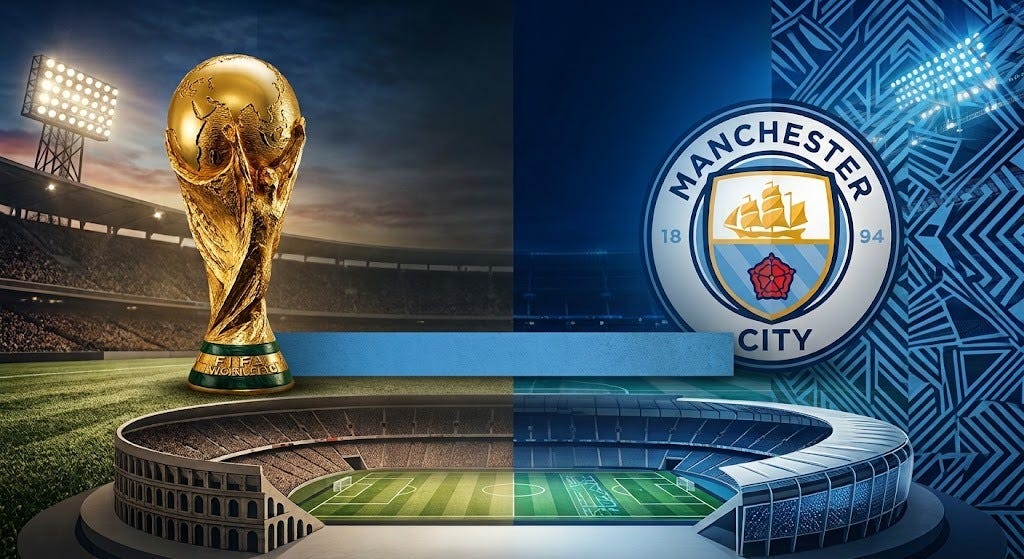
Comedian Geoff Norcott put it well on X last week, in response to Andy Burnham’s misguided comments about Manchester City: ‘Some of the commentariat don’t understand the scale of football’s social media reach. If Liverpool changed managers tomorrow the engagement would dwarf a prime ministerial resignation. This is bigger than some people realise – not a threat to his job obviously, but something millions of people will have strong opinions on.’
That’s why football is a topic we come back to, year after year, at the Battle of Ideas festival. Football is central to our cultural – and sometimes, political – life in the UK. But is the beautiful game being ruined by money? Are the fans being taken for granted, or taken for a ride? We’ll talk about this and more at the session FIFA, Manchester City and the future of football.
There are over 100 debates taking place at the Battle of Ideas festival on Saturday 17 and Sunday 18 October at Church House in Westminster. Tickets for the festival are still available, with big discounts for students and concessions, from the festival website.

The news that the Premier League has found Manchester City guilty of 114 charges of breaching financial fair-play rules and obstructing investigators has leapt from the sports pages to the main headlines. The most successful team in English football over the past 15 years, and one of the richest in the world, has been found guilty of cheating (subject to appeal). As soon as the ruling was leaked last week, speculation kicked off about what kind of punishment would be appropriate: being kicked out of the Premier League, having points deductions for previous season or having trophy victories declared null and void have all been discussed. After years of investigations, the ruling has sent shock waves through football.
But comments by the UK prime minister, Andy Burnham, have added political fuel to the fire. Asked about the club’s owners, Abu Dhabi United Group, Burnham said: ‘I would be really concerned to lose them. They’ve been such a huge partner in the building of modern Manchester, and the building of Manchester City into the global force that it is.’ To many he seemed to suggest that the money spent on developing the club and surrounding area meant more than the scandal of cheating other clubs and their fans out of success on the pitch. No.10 quickly sought to clarify Burnham’s position: ‘Wherever wrongdoing is established, those responsible should face the appropriate consequences.’ Nonetheless, many viewed his statement a big mistake.
The role of Abu Dhabi money in Burnham’s Manchester economic miracle is attracting more and more attention, with allegations of ‘sweetheart’ property deals from Manchester City Council. Is this just the latest example of Gulf oil money being ‘sportswashed’?
The shenanigans at the Etihad are just the latest blow for the credibility of football. In July, FIFA caused uproar by announcing plans to create a new entity, FIFA Forward Enterprises (FFE), to take over all its commercial operations, including the World Cup. The plan controversially included the idea of selling a minority stake, up to 21 per cent, to private investors, with the aim to raise $4.2 billion. Gianni Infantino, president of FIFA, claimed that this would provide millions of dollars in additional development funding for poorer national associations.
However, other national and regional football authorities decried the scheme. The governing body in Europe, UEFA – an organisation which itself is hardly a fan favourite – for once seemed to read the room: ‘This crosses a line that football’s governing institutions should never cross… The soul and governance of football are not assets to trade – especially with zero transparency as to who gains financially. None of us are the owners of football. It is not FIFA’s to sell.’ Capturing a generalised antipathy over recent changes in the game, one journalist wrote, caustically: ‘Football is perhaps reaching the end of its natural existence as a genuine competitive sport and continues to morph into a television-led entertainment business.’
Yet the commercialisation of football has been progressing for decades, from the Sky Sports moneymen dictating to the English Premier League to the razzmatazz of the World Cup in North America, complete with a half-time show in the final itself. Super leagues – a means for the biggest clubs to grab more of the cash – have been attempted and abandoned (and, perhaps, quietly being resurrected). And FIFA itself has been accused of allowing World Cup hosting to be bought, whether it is in Russia, Qatar or Saudi Arabia.
So, the idea that this is the Rubicon football shouldn’t cross dismisses the hundreds of changes that have already pushed the game away from the interests of the fan. For example, early and late kick-offs, scheduled for television’s convenience, cause immense annoyance for travelling fans. The fact that the Crystal Palace supporters group, the Holmesdale Fanatics – for years, the heart and soul of the club – have now given up on organised activity due to obstruction from the club board and the police is a depressing sign of the times.
Are events in Manchester and at FIFA really something new, or symbolic of a wider crusade against the average fan?
Football is the most popular sport on Earth – so is it wrong to exploit that popularity to develop the game internationally? Or does all that money ultimately come out of the pockets of fans? Is the real problem commercialisation or corruption? Few now remember the controversies around the formation of the Premier League or Champions League, but would anyone want to go back?