

In the run-up to the debate From Greenland to Brexit Britain: does sovereignty still matter? at Battle of Ideas North in Manchester on Saturday 7 March (buy tickets here), we present an updated version of this article by Tessa Clarke on another high-profile sovereignty issue: the UK’s deal to hand over the Chagos Islands to Mauritius. An earlier version originally appeared on THE CHAGOS FILES, and we reproduce it with thanks.
In the House of Lords, the UK government has had to ‘delay’ the Chagos Islands sovereignty bill. Temporarily.
This is to allow time for parliamentarians to consider the human-rights aspect of the bill, and for the UK government to negotiate with the US on its impacts on the UK-US’s 1966 treaty that agrees terms for the US military base on Diego Garcia, on one of the islands.
No.10 insists that the deal will still go ahead, especially since Donald Trump’s recent U-turn last week (having previously described it as an act of ‘GREAT STUPIDITY’) giving America’s support again.
As world leaders discuss the fate of the islands, many Chagossians are finding new ways to fight back against the government’s £35bn sovereignty deal with Mauritius (see the end of the article for a note on costs), making new political alliances and coming up with innovative democratic ideas.
Historical context
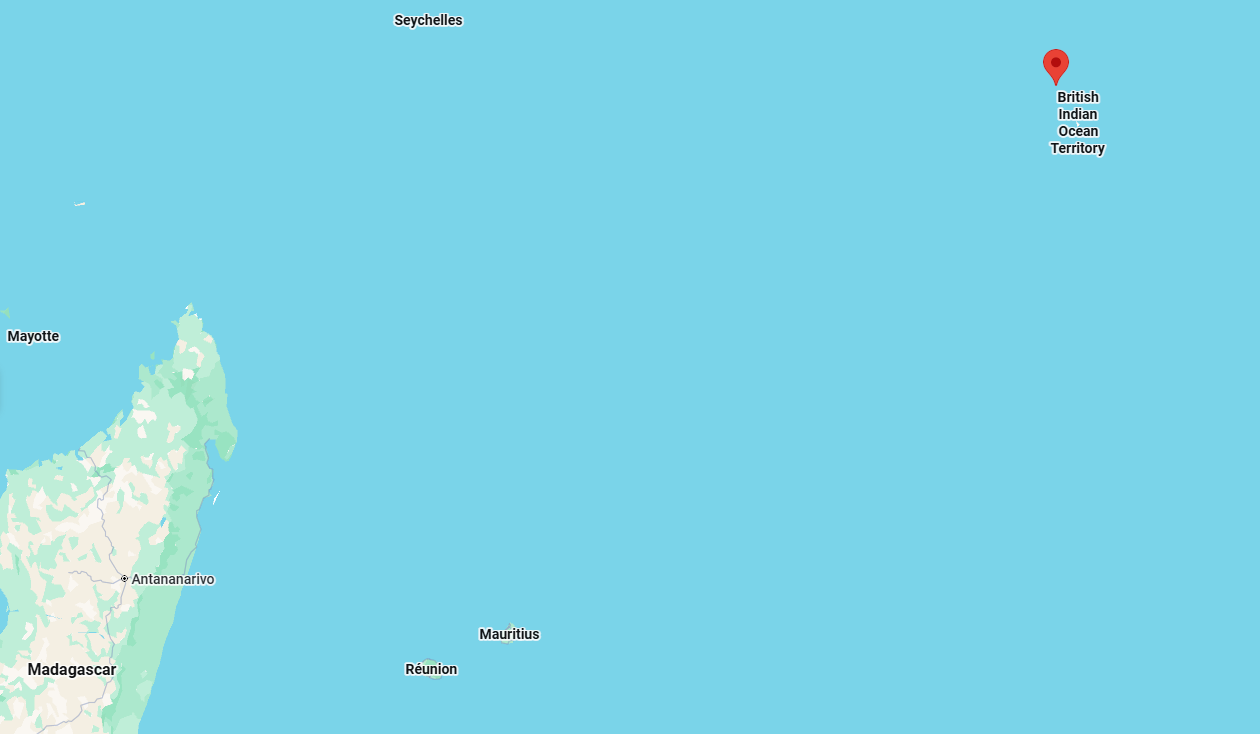
The Chagos Archipelago is located approximately 1,250 miles northeast of Mauritius in the Indian Ocean. The Chagos Islands were previously owned by France, which administered them from Mauritius. Mauritius was captured by the British in 1810, which continued to treat Mauritius and Chagos as a single British territory until 1965, in the run-up to Mauritian independence. The Chagos Islands became a separate territory – now officially called British Indian Ocean Territory (BIOT) – and an American naval base was set up on the largest island, Diego Garcia. Mauritius was paid £3million in compensation for the loss of the islands. In the process, the Chagossians were deported from the islands.
Following an advisory opinion from the International Court of Justice in 2019, demanding that the UK relinquish control of the Chagos Islands, negotiations began between the UK and Mauritian governments. In October 2024, it was announced that the UK government had agreed to hand over the islands to Mauritius but would pay Mauritius to lease Diego Garcia in order to retain the military base.
During all this the views of the Chagossian people have not been taken into account. They feel ignored by successive British governments, President Trump, the International Court of Justice (ICJ) and Mauritius – but they are not giving up their demand for self-determination.
Reaction to the Chagos deal
Speaking on BBC Radio 4’s Today programme on 22 January, the foreign secretary, Yvette Cooper, dismissed President Trump’s scathing comments. She reiterated that the President had supported the deal a year ago in Spring 2025, suggesting that he is now trying to put pressure on Prime Minister Keir Starmer because of the United States’ desire to have sovereignty of Greenland to enhance Western security in the Arctic.
Cooper also had little time for the opposition in Britain, including that from the Conservatives and Reform political parties, saying: ‘Other people want to just sort of make claims and statements and tweets and headlines and all of those sorts of things. Our focus is on our long-term national security.’ No mention was made by Cooper about Chagossians’ call for their democratic rights, despite prompts from Today’s presenter.
Chagossians campaigning for the right to resettle on the islands, for self-determination and opposition to the sovereignty of the Chagos archipelago being handed over to Mauritius are having none of it.
All opposition Chagossian groups in the UK support Diego Garcia (the island with the UK-US military base on it) continuing its role in the interests of British national security. Instead, they would like to resettle on the outer islands in the Chagos Atolls. Their call for self-determination is not a call to make the Diego Garcia military base into a tourist destination.
Now, together with other Chagossian opposition campaigners living in France, Switzerland, Mauritius and the Seychelles, Chagossian leaders are increasing their visibility on the world stage. Here are some of the key players:
BIOT Citizen
This is a British and Mauritius-based group, campaigning for Britain to retain the Chagos Islands and for the return of the Chagossians’ to their ‘homeland’. They have worked closely with Friends of the British Overseas Territories (FOTBOT) and the Great British PAC (Great British Political Action Committee) and received support from Priti Patel, the Conservative Party’s Shadow Foreign Secretary.
Last year, BIOT Citizen members voted for their leader Misley Mandarin to be interim first minister of a Chagossian government-in-exile. On 21 September 2025, Mandarin who posts regularly on Facebook called for Chagossians to vote for Reform UK. Last month, Mandarin attended the Crown Dependencies and British Overseas Territories All Party Parliamentary Group chaired by Andrew Rosindell MP who recently switched from the Conservatives to Reform.
Recently the group said they would name an island after Trump if the president vetoed the treaty deal. Meanwhile Vanessa Callou, another leading BIOT Citizen and Government-in-Exile campaigner, has been helping Mauritian Chagossians arriving in the UK last year get accommodation.
Chagossian Voices (CV)
This is a community organisation for Chagossians around the world with a Facebook page and website updating readers with news. The group has opposed the deal with Mauritius on the grounds of self-determination and indigenous rights. Chagossian Voices also rejects the idea that if Mauritius gains sovereignty of the islands, a Mauritian minister should choose the Chagossian representative from the UK.
Frankie Bontemps, chair of CV, has written to the Foreign Secretary to raise concerns about the Trust Fund for the Benefit of Chagossians Bill currently going through the Mauritian Parliament. He points out that only one UK representative will sit on a proposed Trust Fund Board compared to five Chagossians from Mauritius, even though about half of Chagossians live in Britain.
Indigenous Chagossian People (ICP)
This is a newly formed group made up of several groups, including Association Chagossien De France. Members include Bernadette Dugasse and Bertrice Pompe, who have been leading legal challenges to successive British governments and lobby politicians and British Indian Ocean Territory (BIOT) civil servants and politicians in support of Chagossian rights for years.
Recently the ICP sent hundreds of letters to UK parliamentarians calling for self-determination for the Chagossians and for parliament to call a referendum. ICP members have campaigned at the United Nations, too. On 2 December, the UN Committee for the Elimination of Racial Discrimination (CERD) reached a formal ‘decision’ on the treaty. It called for the sovereignty treaty bill not to be ratified because it doesn’t allow the Chagossians to resettle on the islands nor have self-determination.
Opposition in parliament
More British MPs – including senior politicians such as Priti Patel MP, the shadow foreign secretary (Conservatives) and Richard Tice MP (Reform) –are speaking out against the deal. Labour MPs are starting to oppose their government’s treaty Bill, too. Peter Lamb is the Labour MP for Crawley, the London borough where many Chagossians live. He says: ‘Ukrainians, Greenlanders, Chagossians, all have a right to self-determination. As a party and a country, we should stand up for that right.’
Labour MP Graham Stringer wrote in The Telegraph that, ‘the [2024 Labour Party Election] manifesto pledges to the British people that Labour will “always defend their [British Overseas Territories] sovereignty and right to self-determination”. The Diego Garcia Bill does the exact opposite.’ Former Labour MP Kate Hoey, now a non-affiliated member of the House of Lords, spoke recently in the Lords asking: ‘What’s the difference between [the government asking Greenlanders what they think of the US’s demands over their country and] not allowing the Chagossians to have any say at all in us selling the Chagos Islands off?’
It’s time to listen to the Chagossians
Will the rise of anti-treaty Chagossian campaigners and their supporters on the national and international political stage trigger a rebellion against the treaties’ terms among the British public?
Yvette Cooper has said that the only reason for the deal is that is in the UK’s national interest, to avoid taking risks with national security and avoid legal challenges. She said the treaty deal aims ‘to strengthen intelligence and cooperation with the United States and that there is a firm legal basis for doing so.’ This sounds compelling. Last week, President Trump said he would be prepared to military defend the US military base if necessary. Recently the US signed a defence contract for maintaining operations at the military base until 2034. Soon, a US delegation is visiting Mauritius to discuss the new geo-political arrangements.
As the treaty bill looks set to be enacted through parliament given Labour’s majority in parliament and with possible support of Liberal Democrat MPs, the government’s arguments leave out the right of self-determination for Chagossians to right the wrongs of colonialism. There are many ways of ensuring Britain’s national security. The arguments need to be heard more widely, explaining why all British people should be aligning with the Chagossians’ democratic cause and at the same time supporting national security.
Tessa Clarke is an award-winning investigative journalist, and editor, THE CHAGOS FILES. Follow her on X: @TessaClarkeLive

THE COST OF THE CHAGOS SOVEREIGNTY DEAL
The £35bn (£34.7bn) figure originates from the Government Actuary’s Department (GAD), a report released following a Freedom of Information request by the Conservative Party last year, reports The Telegraph.
The foreign secretary, Yvette Cooper, has refuted this figure but has not given an alternative total figure on the cost of the Chagos Islands deal. Instead, she says that the cost was 0.02 per cent of the Defence annual budget.
Negotiations with Mauritius are still ongoing. And the treaty hasn’t yet been approved by parliament. Negotiations with the US are on-going. There is still a chance the cost could change.

Thanks, good article.
I was looking at Google maps the other day when this came up in the news. If you click satellite view, you can see the geological structures the islands sit on. From that view it seems more logical that Chagos islands joined with Maldives than Mauritius. Maldives is also far away, but at least it might be a logic to it from a geological point of view.
The Mauritius argument, far as I can see, comes down to colonial administrations, and so not very convincing.
Self determination then should be the only way to settle this, so I hope very much the Chagossians campaigns succeed.