

‘Leaving the EU was a catastrophic mistake’, declared Wes Streeting as he launched his campaign to be Labour Party leader and prime minister. ‘The Vote Leave campaign deluded itself into thinking the UK could forge a global free-trade nirvana as though we still had the East India Company at our disposal.’ (The bizarre reference to the East India Company presumably confirms that Rejoiners are more obsessed with the days of empire than Leavers ever were.) Streeting argued we’re living in a ‘dog-eat-dog world’ where ‘middle powers going it alone is a fantasy… in a dangerous world, we must club together’. He called for a ‘new special relationship’ with the EU, including ‘one day’ rejoining.
Andy Burnham had already stated at the Labour Party conference last year: ‘Long term, I’m going to be honest, I’m going to say it, I want to rejoin it. Look, I hope in my lifetime I see this country rejoin the European Union.’ When pressed by ITV News on Saturday, he said that ‘in the long term there is a case for that’ but that he was ‘not advocating that in this by-election’.
None of this is exactly a shocker from the locker. The current prime minister, Keir Starmer, was at forefront of attempts to stop the UK leaving when he was shadow Brexit secretary. The majority of Labour members support rejoining. Earlier this month, LabourList reported on a Survation poll suggesting that ‘87 per cent of Labour members would back Britain returning to the European Union, with 72 per cent strongly supporting rejoining’. Two thirds of Labour members thought the party should make a commitment to rejoining.
Notably, such enthusiasm wanes markedly when the idea of joining the Euro – which would surely be a condition of rejoining the bloc – is added to the question. Does anyone think the idea of rejoining the EU – on much worse terms than we left on (no rebates on contributions or other opt-outs), with free movement restored, the obligation to join the single currency, no Thatcher-negotiated budget rebate and pitiful defence cooperation – is going to fly with the wider electorate? No wonder Streeting and Burnham are keeping such talk at the level of long-term aspiration.
Both Streeting and Burnham know the electorate that ultimately matters: Labour Party members, for they are the ones who will decide who the next leader is. That said, Burnham faces the prospect of fighting a by-election in Makerfield, an overwhelmingly Leave-supporting constituency – and both have been suitably vague about when we might actually rejoin. Indeed, today, clearly aware that a pro-rejoin position could be a disaster in the by-election, Burnham said: ‘I am not proposing that the UK considers rejoining the EU. I respect the decision that was made at the referendum and it’s going to undermine everything I’ve said about strengthening democracy if we don’t respect that vote.’
But the claim, repeated by Streeting, that leaving the EU has been ‘catastrophic’ is ironic given the latest UK economic data. The UK would appear to be the fastest growing of the G7 group of leading economies and growing faster than the Eurozone. So, Labour is simultaneously crowing about its brilliance in running the economy while claiming that we can only be saved by developing a closer relationship with an equally moribund EU.
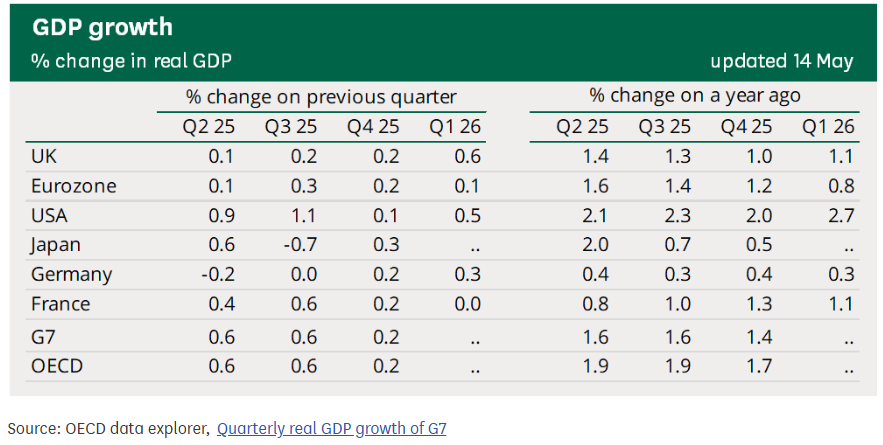
The truth is that these latest figures probably flatter UK performance. We will wait to see how the rest of the year pans out. In reality, the UK economy is doing no better or worse than the countries that are reasonably similar to ours and somewhat worse than the United States. With better policies on energy, taxation, planning and more – which a UK government has much more freedom to implement thanks to Brexit – the UK economy could be lifted out of the doldrums.
Moreover, Streeting is wrong about free-trade deals. The UK is well ahead of the curve in negotiating deals with other countries and groups beyond Europe while enjoying a free-trade deal with the EU, too. Just today, there are reports that a deal with the Gulf Cooperation Council states – Saudi Arabia, the United Arab Emirates, Qatar, Kuwait, Bahrain and Oman – is nearly complete.
Still, with the government desperate to sign more deals with the EU for ‘closer cooperation’ (in other words, being rule-takers and financial contributors in exchange for, er, little of substance), the Brexit debate rumbles on. And, of course, the Battle of Ideas festival has been very much part of that debate. Here is a selection of our recent Brexit-related sessions from the Battle of Ideas archives to listen to and watch.
Running back to EU? Labour, Europe and the economy
Battle of Ideas festival 2024
Speakers: Catherine McBride, Ali Miraj, Dr Thomas Sampson, Gawain Towler
Brexit: how can we take control?
Battle of Ideas festival 2023
Speakers: Dr Philip Cunliffe, James Hallwood, Baroness Kate Hoey, James Holland, Professor Peter Ramsay
Brexit: a revolution by or against the establishment?
Battle of Ideas festival 2019
Speakers: Lisa Mckenzie, Professor Anand Menon, Daniel Moylan, Bruno Waterfield
After Brexit: the new political faultlines
Battle of Ideas festival 2019
Speakers: Lord Maurice Glasman, Joan Hoey, Christian May, Professor Anand Menon