

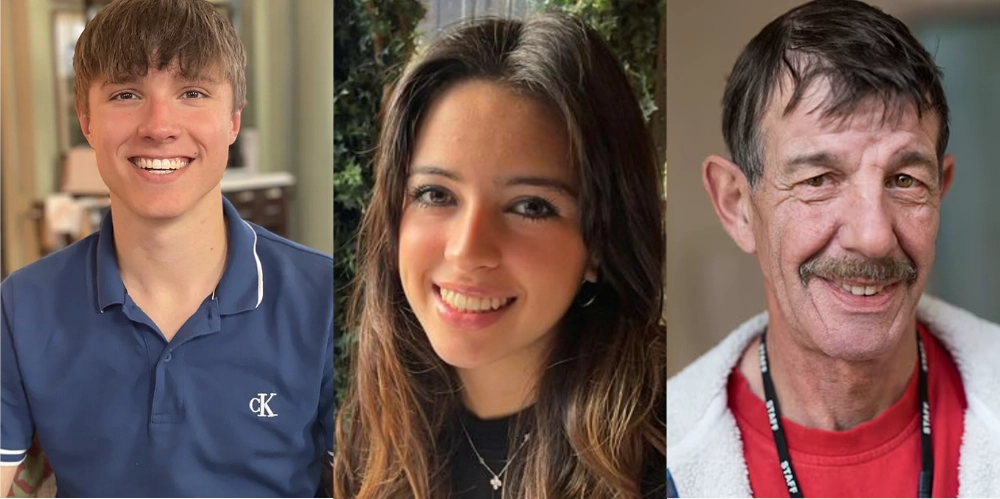
In many ways, what’s emerged from the Nottingham Inquiry is exactly why the Battle of Ideas exists: ordinary people asking difficult questions about why and how we do things, without fear of the consequences, in pursuit of the truth.
The bravery embodied by the families of Barnaby Webber, Grace O’Malley-Kumar and Ian Coates has inspired the whole Academy of Ideas team, and we’re honoured to have Emma Webber, Barnaby’s mother, speaking at the Battle of Ideas this year.
One contribution we ALL can make is to listen to the findings that are available to us because those families held institutions to account. They refused to go quietly into the night. Let’s help turn that awful cliché ‘lessons will be learned’ into a concrete public clamour for real change. If we can really learn the lessons from evidence that the families have worked so hard to expose - and demand change from our institutions - lives will likely be saved in Nottingham and beyond.
So please, listen to Emma below, and do your best to watch the findings of the Nottingham Inquiry - which will be streamed on Tuesday and Wednesday this week via the Nottingham Inquiry YouTube channel. You can also view my speech in the House of Lords on accountability.
Below, you can also find the blurb for our session Grooming gangs to the Nottingham Inquiry: untangling accountability at Battle of Ideas festival, which takes place on Saturday 17 & Sunday 18 October at Church House, Westminster. Full details for the festival are here.
Claire
Emma Webber message
Claire Fox speech
Grooming gangs to the Nottingham Inquiry: untangling accountability
Battle of Ideas festival, Sunday 18 October
For programme and tickets, visit the Battle of Ideas festival website.
What happens when multiple state agencies are implicated in tragedies and scandals that lead to harm for members of the public? In cases of catastrophic state failure – from the grooming-gangs scandal to what has emerged from the Nottingham Inquiry into the deaths of Barnaby Webber, Grace O’Malley-Kumar and Ian Coates – the gaping hole at their heart is the lack of meaningful institutional accountability.
In relation to events in Nottingham, in 2020, Valdo Calocane was diagnosed with paranoid schizophrenia and a consultant psychiatrist warned that could ‘end up killing someone’. Before he eventually did just that, there were myriad warning signs that were ignored. In 2021, he headbutted and punched a police officer; in 2022, he attacked a flatmate, putting him in a headlock; and just five weeks before the Nottingham killings in 2023, he assaulted two colleagues at work. Yet despite being sectioned four times, repeatedly refusing to take medication, he was discharged from specialist mental-health services in September 2022 and seemingly officially forgotten about by authorities. In the subsequent investigation, a chain of failures across mental-health services, policing and local government have been exposed. Yet no one has been sacked for these obvious derelictions.
The failures associated with the grooming-gang scandals hardly need repeating. Victim accounts have alleged that police officers not only ignored their complaints or information from whistleblowers, but in instances facilitated abuse, with some even participating in the sexual abuse; that social services delivered children into the hands of their abusers and, on occasion, sat in on child marriages; and that NHS officials ignored clear signs of sexual exploitation and abuse. Yet despite widespread evidence of institutional failure – and, in some cases, allegations that officials actively enabled abuse – criminal accountability has been remarkably limited. Very few officials have been prosecuted. More often, senior figures resigned or retired, frequently retaining their pensions, while the prospect of meaningful accountability departed with them.
So, how can society hold those implicated in such state-facilitated preventable harms to account? One obvious route is inquiries; the reluctance from the government to hold an inquiry into the rape-grooming gangs, and the relief when it was granted, might suggest this is one solution. But some fear inquiries can be lengthy, expensive ways of delaying justice. The UK has spent at least £1.5 billion on completed inquiries since 1990, with active, ongoing inquiries continuing to cost taxpayers upwards of £200million a year. Despite these vast costs, the government are not required to be open with the public or give reasons if they decide not to implement inquiry recommendations.
What about criminal law? Labour peer Lord Glasman has argued that rather than a Grooming Gangs Inquiry, the government should establish a commission with powers of arrest, insisting that ‘the people who are reluctant to investigate it (from police to social workers) have got to be themselves investigated’. Meanwhile, the NHS trust that treated Calocane is being investigated for corporate manslaughter. Will that force more accountability?
Most recently, the Hillsborough Law, especially championed by Andy Burnham, has been greeted as a gamechanger that promises to make institutional evasion harder. It would place public authorities and officials under a legal duty of candour, requiring them to disclose what they knew, correct misleading accounts and cooperate honestly with investigations rather than close ranks around their institutions. But will this legislative solution actually change the culture and ensure public bodies act with honesty, openness and integrity?
When public institutions fail catastrophically, how can we ensure accountability doesn’t end with just an apology and resignations? And why does it take public outrage, victims’ and families’ tireless campaigning, a minority of journalistic expose and / or courageous whistleblowers to force authorities to pay attention? But crucially – why do state agencies keep failing and keep covering up? Are such serious derelictions of public service duties due to indifference, incompetence or more malign drivers? We ask two people at the heart of exposing inconvenient truths, Maggie Oliver and Emma Webber, alongside sociologist Frank Furedi, founder of the new Crisis of Competence project, to unravel the crisis of accountability.
SPEAKERS
Frank Furedi
sociologist and social commentator; author, In Defence of Populism
Maggie Oliver
criminal-justice campaigner; author
Emma Webber
mother; public speaker and campaigner for justice
Quick question will our awesome Intel Lady be at battle of ideas this year? Hope so! She's epic! Thanks!
When it comes to accountability the order of events is this:
1. "Nothing to see here"
2. Kick into long grass (Inquiry)
3. 'Bad apple' scapegoat
4. "Lessons will be learned"
5. Praise, rewards and honours for all complicit