


Recent abortion stats showing a big uptick in numbers in the past few years have caused something of a stir on social media. More women - particularly young women - are seeking early abortions, often using ‘pills by post’ - the telemedical method introduced during the pandemic. While anti-abortion campaigners see any level of abortion as a problem, these latest figures have united more moderate conservatives – even many MPs - in concern. Many have tried to link conversations about the birthrate with abortion figures, arguing that society has a duty to do something - perhaps even ban or restrict access to abortion - in order to convince women of the benefits of starting a family.
Every year at the Battle of Ideas festival, we discuss abortion in some form. We have a rich archive of debates on everything from decriminalisation to the history of contraception, changes to the law in the US and deeper discussions about moral autonomy and women’s freedom. But while abortion has always been something of a background issue, the question of how free or unfree women should be to make decisions about their own body is now becoming a central issue.
Despite women voting with their feet, as shown in these statistics, an international anti-abortion movement seems to be gaining traction, particularly with many young conservatives who see rising abortion stats as a sign of a social ill. Additionally, Clause 191 of the Crime and Policing Bill, passed in a free vote in the House of Commons, would ensure that women in England and Wales would no longer be subject to criminal charges or custodial sentences for ending their own pregnancy outside the law. This has been deemed as effective decriminalisation of late abortions to birth, and has caused huge controversy - even among some pro-choice advocates. It will be discussed in the House of Lords, tomorrow, on Monday 2 February - all the more reason to take a step back and consider the bigger picture here.
Outside of the usual for-and-against arguments around abortion rights - which we hashed out at last year’s Battle of Ideas festival - it is also useful to unpick what we can learn from these statistics about women’s changing relationship with pregnancy and family planning. It’s also useful to figure out what we can’t link to these stats - and separate moral conundrum from moral panic. We are therefore delighted to have this guest Substack from Professor Ellie Lee - a longtime Battle of Ideas speaker, organiser, writer and thinker. Ellie’s work at the Centre for Parenting Culture Studies - which she founded - has informed many of our discussions about women’s freedom and abortion over the years. Enjoy the essay below and let us know what you think about the issue by sharing and commenting on our Substack or social media channels.
Ella Whelan
The future of abortion and the family
Earlier this month, the Department of Health and Social Care (DHSC) released the abortion statistics for 2023 for England and Wales (since devolution, Scotland reports separately). It is a legal requirement that any abortion provided under the terms of the 1967 Abortion Act be notified to the DHSC, with annual reporting covering everything from numbers and rates of abortion by age group, gestation and abortion method to the statutory ground, area of residence, recorded ethnicity, previous abortions and previous pregnancies, along with provision of abortion to women residing outside England and Wales.
There is nothing new in the release of these statistics, which often provoke intense debate. Since 1968, as the graph below shows, the overall trend has been to an increasing abortion rate. Over this time, those opposed to abortion presented a picture of the law being flouted, with women obtaining abortion too easily - often, they argued, driven by a coarsening of social morality. Those involved in public health and family planning sometimes shared concerns about rising numbers, but instead drew attention to problems in access to contraception.
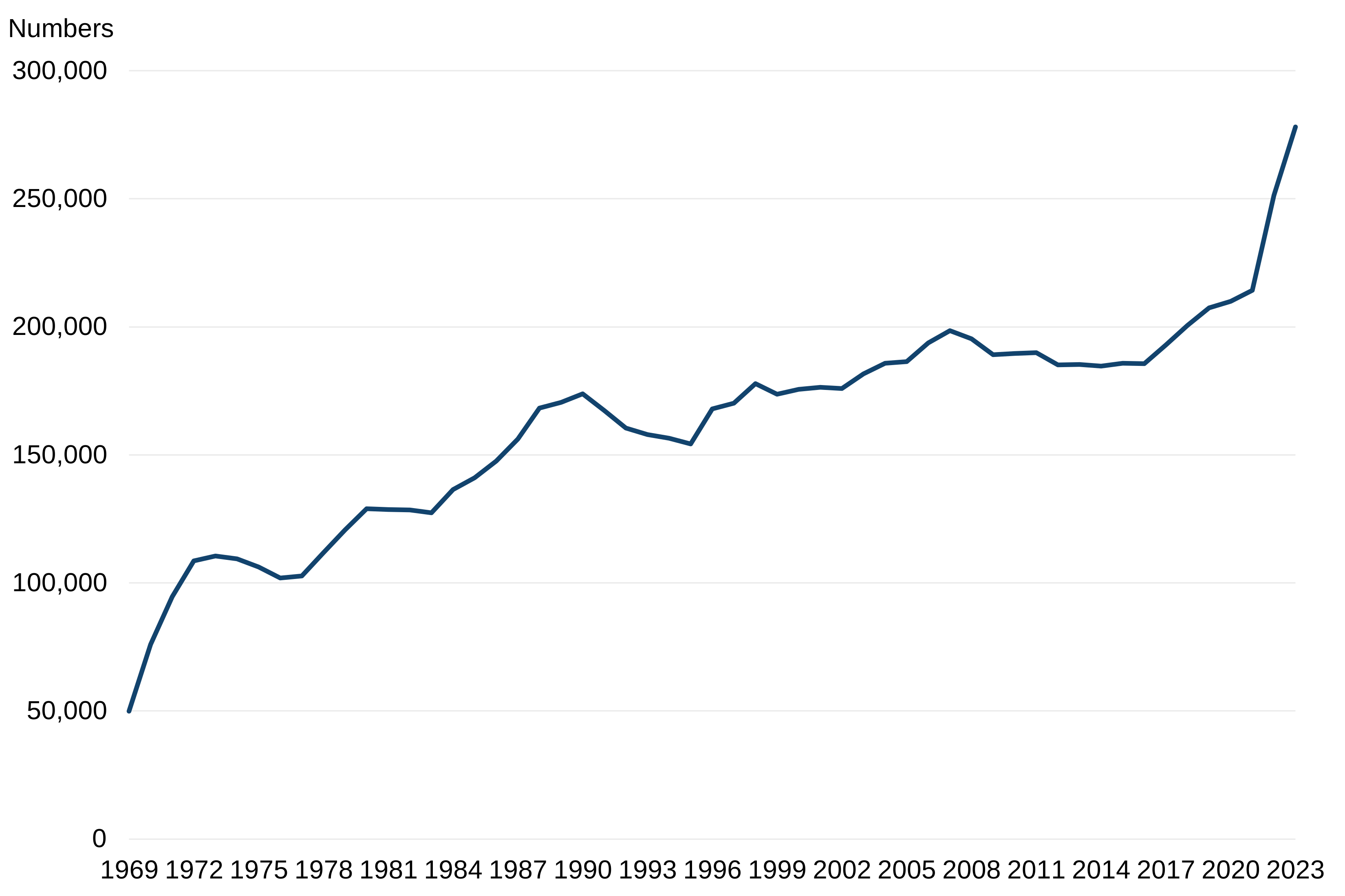
This year, reaction has been both extensive and different - which is entirely understandable, in so far as the statistics show a remarkable uptick in the number and rate of abortions. As the DHSC notes, both the number and rate of abortions are the highest since 1968. But, more specifically, there has been a shift in the rate of increase. The number of abortions provided was 11 per cent higher than in 2022 (a year which saw an increase of 17 per cent on the previous year). The overall abortion rate (that is, abortions per 1,000 women aged 15 to 44) rose to 23 per cent across all age groups.
This sudden change in the propensity for women to end pregnancies has been linked much more explicitly than before to discussion of the ‘birth-rate crisis’. Providers and commentators from public health have made the cost-of-living central, suggesting women are now ending pregnancies they might otherwise continue because of financial pressures. Attention has also been drawn to the fact that more than half of recorded abortions have been provided to women who are already mothers (a fact that is not new, but is important). Anti-abortion campaigners and social conservatives have been unrestrained in their claims, suggesting the abortion rate stands as an indictment of ‘broken Britain’. Former MP and GB News presenter Miriam Cates has described the situation as a ‘moral and economic tragedy’, suggesting the abortion rate shows society is failing at every level. For Cates, abortion must not be seen as a matter of individual rights and choices, but as the most pressing social, collective concern.
It is a good thing that debate is opening up. In years past, only a few sought to widen the lens of discussion. Back in 2008, Ann Furedi, then CEO of the abortion provider British Pregnancy Advisory Service (BPAS), argued any discussion of abortion rates should consider both changing perceptions of the responsibility of motherhood and a wish for sexual intimacy. It is high time that more voices become involved in making sense of motherhood and ‘family planning’ and the challenges and issues involved. We all need to think seriously about how to consider the relationship between the family and society, the value of having children and what motherhood and fatherhood has come to mean.

Fertility patterns are influenced by a great deal more than economics and income. A growing body of literature has drawn attention to changes in parenting culture, the over-complication of parenthood and the undermining of parental authority. Indeed, back at the start of this century, sociologist Frank Furedi argued an outcome of what he called a culture of ‘paranoid parenting’ would involve people voting with their feet when it comes to becoming a parent. For my own part, I think there is value in thinking about how all of the things that make up privacy and private life, including the family, have become disenchanted - a process Tiffany Jenkins discusses brilliantly in her recent book, Strangers and Intimates: the rise and fall of private life.
In pursuing this discussion, however, it is very important to distinguish which of these arguments is about abortion, and which are not. Some are arguing that abortion, and women’s ability to access it more easily, is the underlying cause of a falling birthrate. If you follow the debate on social media, determined efforts are clearly afoot to argue that what society needs to do is restrict access to abortion in the general interest - even ban it altogether. This sort of argument pitches moral autonomy and the ability to act in relation to any sustainable idea of privacy for the individual or family as being against the interests of society as a whole. But not only is it a moral mistake to demean autonomy and privacy in this way, restricting women’s freedom is both undesirable and unrealistic. It is not reasonable to imagine any society can solve its problems by compelling women to bear children they do not want to have.
There are, additionally, very important abortion-specific issues that need to be recognised and evaluated. Recent changes to the abortion rate are not simply a continuation of what has come before. Far more than anything, they are shaped by the impact of changes to how abortion is provided, in the context of significant shifts in the place of the contraceptive pill in women’s lives.
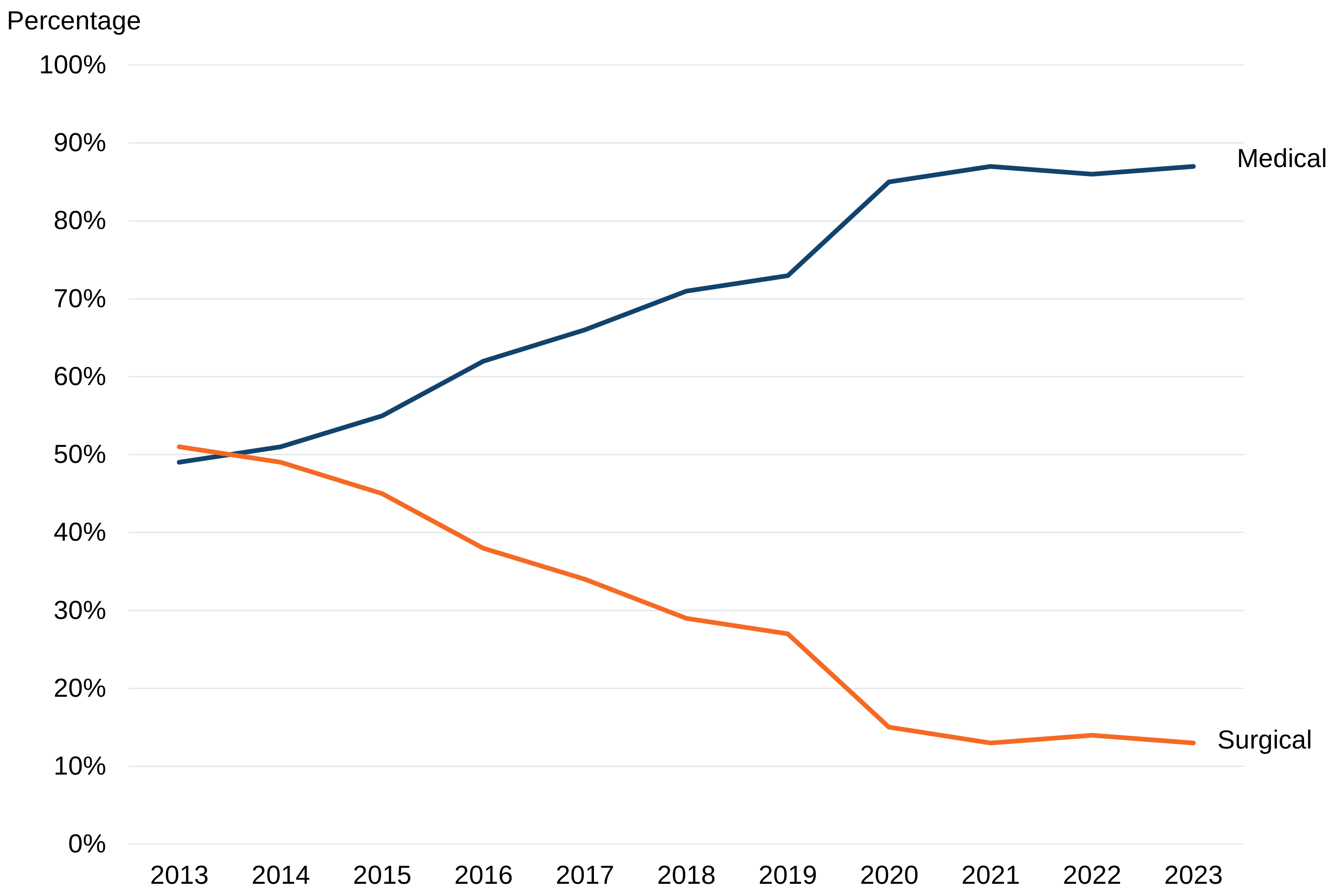
The graphs below show that first, some years ago, ‘abortion’ became mainly ‘medical’. What this term captures is the fact of a miscarriage induced by a woman taking ‘abortion pills’. These are non-hormonal drugs (mifepristone and misprostol) which act together to disrupt the hormone progesterone and make the womb contract. Second, while the proportion of abortions after 10 weeks has declined (from a low starting point), abortion very early in pregnancy has become relatively more common.
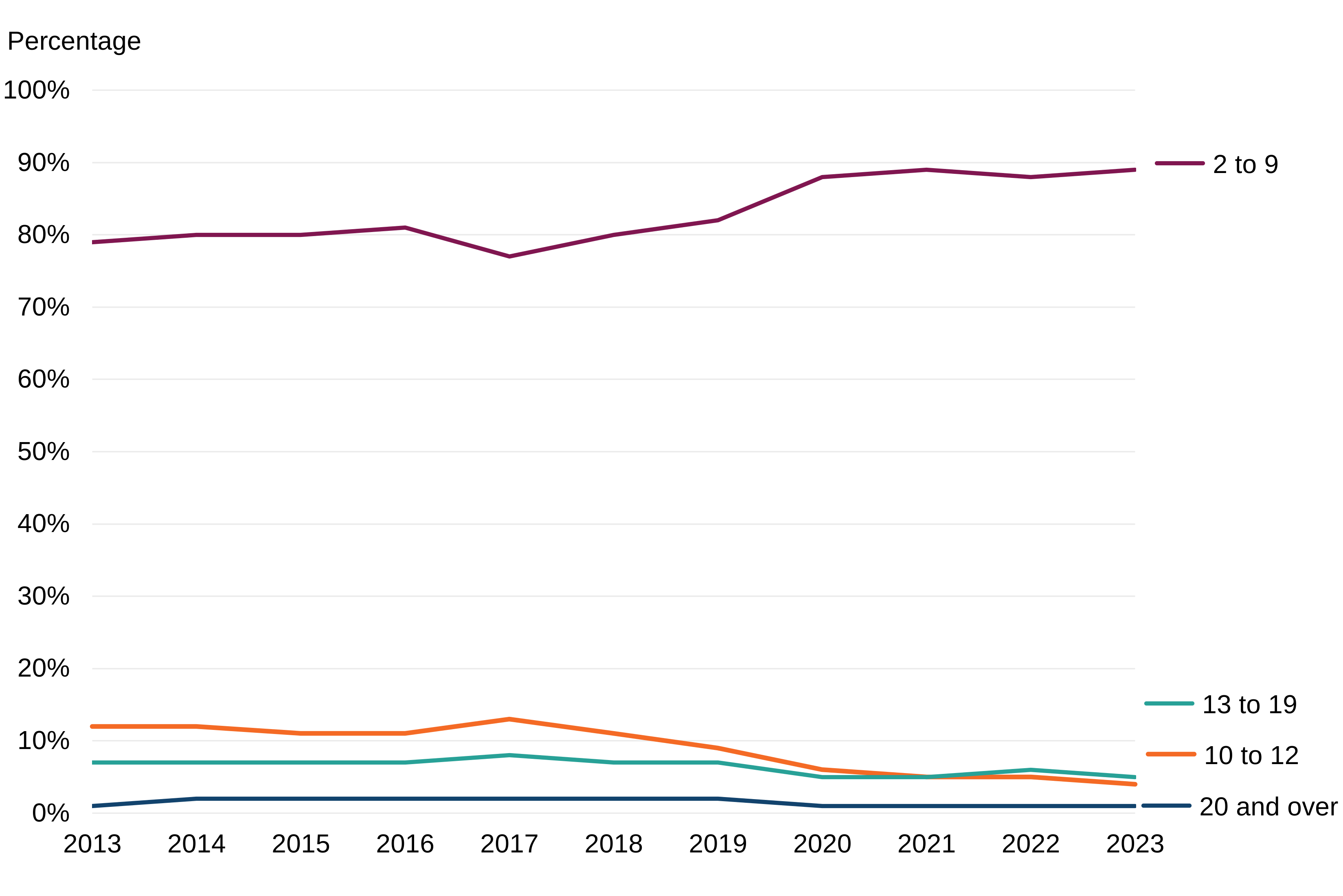
Over the same time period, use of the hormone-based oral contraceptive pill has declined. It is still a popular contraceptive, but has become increasingly surrounded by hostile, negative messaging. Without a doubt, women - younger women especially - are far less amenable to taking it every day. Pregnancy has, for some, become the preferred risk. The way in which many women consider managing the risks of heterosexual sex has shifted, and in fact did so well before 2023, with very early abortion being more widely seen as an acceptable means to do so.
It is also the case, however, that the cause of the current furore about the abortion rate is driven by something genuinely unprecedented - an almost 90-degree uptick in abortion numbers from 2022. There is a very specific reason for this, which is the pivot in how abortion pills are provided to women. In the pandemic, the main route of access shifted to ‘pills by post’ This system was organised around telemedicine, rather than visits to a clinic, and it has stayed firmly in place since the pandemic ended. One thing this has done is reshape what ‘a notified abortion’ is in the statistics. Where abortion was previously provided to a woman in a clinic, now it can be a prescription for pills sent to a woman in the post. Accessing these pills has also become very straightforward – arguably more straightforward than visiting a GP or a pharmacy for other sorts of available pills (contraceptive pills and emergency contraceptive pills).
It is perfectly plausible that what it means to ‘decide’ in the face of unintended pregnancy has radically shifted in this context. If a woman finds herself pregnant, and is considering what to do, she may well ‘risk manage’ the situation by requesting pills by post as soon as possible. This gives her time to think, consider, decide, in the knowledge she can act fast when she is clear. This does, of course, mean that the almost vertical uptick will include a proportion of unused pills. Recognising this may not be to the liking of anti-abortion campaigners who want to provoke a moral crisis. It will also be something health officials would never want to mention - my goodness, what if abortion medication is left unused in a bathroom cabinet? What if a woman gives it to her friend in need?
This possibility does not detract from the reality that more women than ever (and especially those in their late teens and early 20s) know about pills by post and use them as their means to abortion. But is this really a moral crisis? Perhaps we need to find a way to better discuss and appreciate how women now think about and take responsibility for the implications of a ‘missed period’ alongside the wider questions around families and their future.
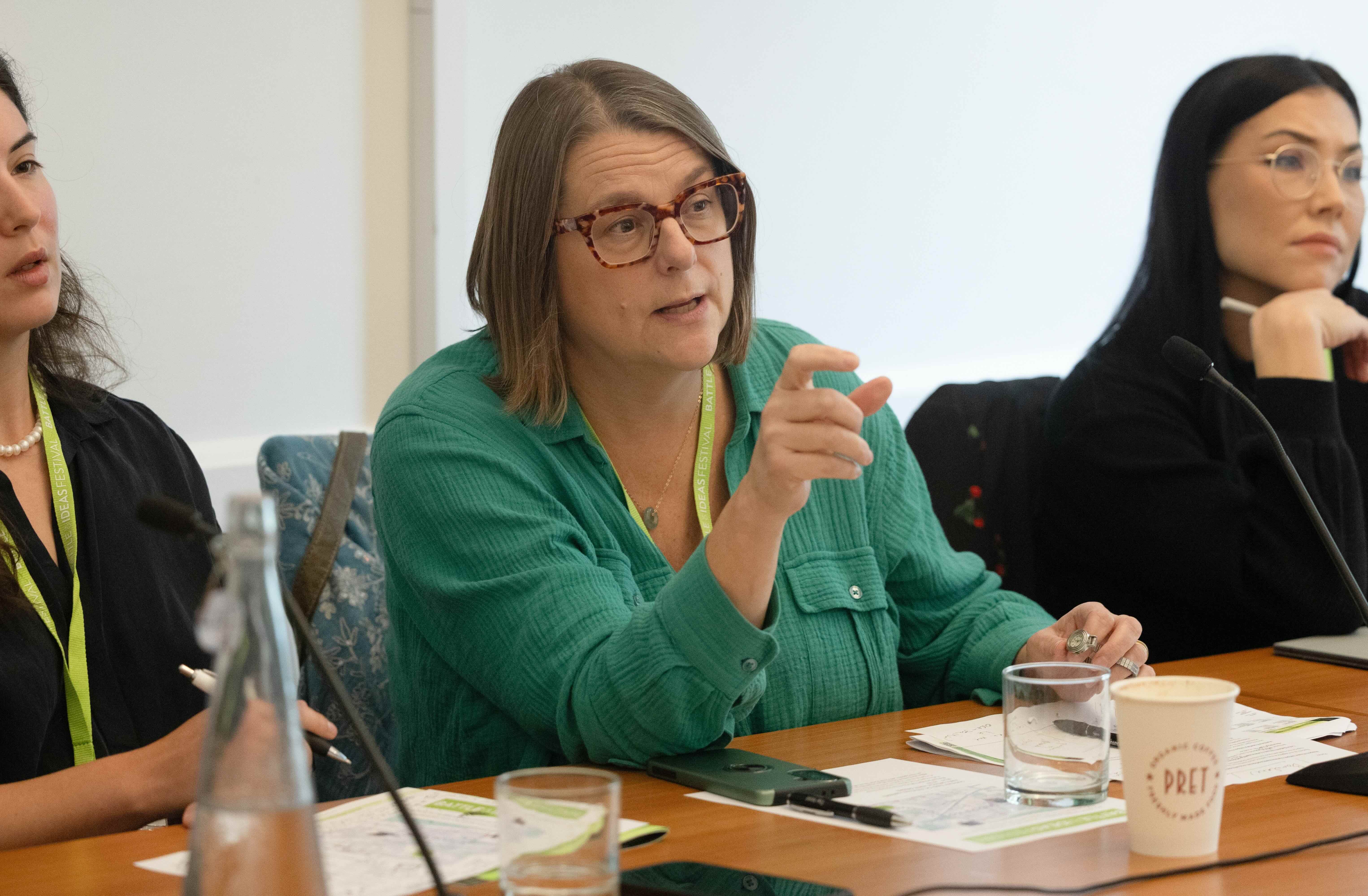
Dr Ellie Lee is professor of family and parenting research at the University of Kent, where she is also the director of the Centre for Parenting Culture Studies. Her research and teaching addresses why bringing up children has been re-cast as ‘parenting’ and why everyday, personal issues – for example how women feel after abortion or how mothers feed their babies – turn into major preoccupations for policy makers and become heated topics of wider public debate. She is co-author of Parenting Culture Studies (Palgrave), now in its second edition. Ellie is an active member of Academics for Academic Freedom.
Catch up with related discussions from the Academy of Ideas and Battle of Ideas festival archive
The international abortion wars
Abortion: a civilised debate
Abortion: a medical or moral choice?
Abortion: how late is too late?
The moral case for abortion
This is a very interesting analysis, raising a lot of points which are often overlooked – thank you.
The deeper issue is cultural: we’ve detached sex from its meaning and purpose and then offer violence or chemicals as the clean-up. Real freedom would rebuild responsibility, commitment, and support for women so that ending a child’s life is never presented as empowerment.
Calling abortion “risk management” reframes a new human life, a girl or a boy as a problem to be eliminated. And many contraceptives are not morally neutral either: they can be abortifacient by preventing implantation, treating the earliest human life as disposable. Freedom isn’t the power to dodge consequences by hurting ourselves and others and calling it "choice". Sex has consequences, and pregnancy isn’t a pathology — it’s a natural human cycle.